The History of Bitcoin: From the 2008 Whitepaper to 2026
How an anonymous creator, an experimental payment network, and a revolutionary mining system changed the way the world thinks about money.
Introduction: Before Bitcoin Changed Everything
Imagine sending money to someone on the other side of the world without asking a bank to approve the transaction. No traditional payment processor, no central institution maintaining the only official ledger, and no requirement for both people to use the same financial company.
Today, that idea may sound familiar. But in 2008, it was a remarkable proposal.
The world was experiencing a severe financial crisis. Major financial institutions were struggling, confidence in banking systems had weakened, and questions about who should control money were becoming increasingly urgent.
During this period, an unknown individual or group using the name Satoshi Nakamoto introduced Bitcoin.
Bitcoin did not immediately become a popular investment or a global payment network. It began as an experiment among cryptographers, programmers, and people interested in digital money.
What made it different was its design: a public transaction ledger maintained by a distributed network rather than a single company or government.
To understand modern cryptocurrency mining, we first need to understand how that experiment began.
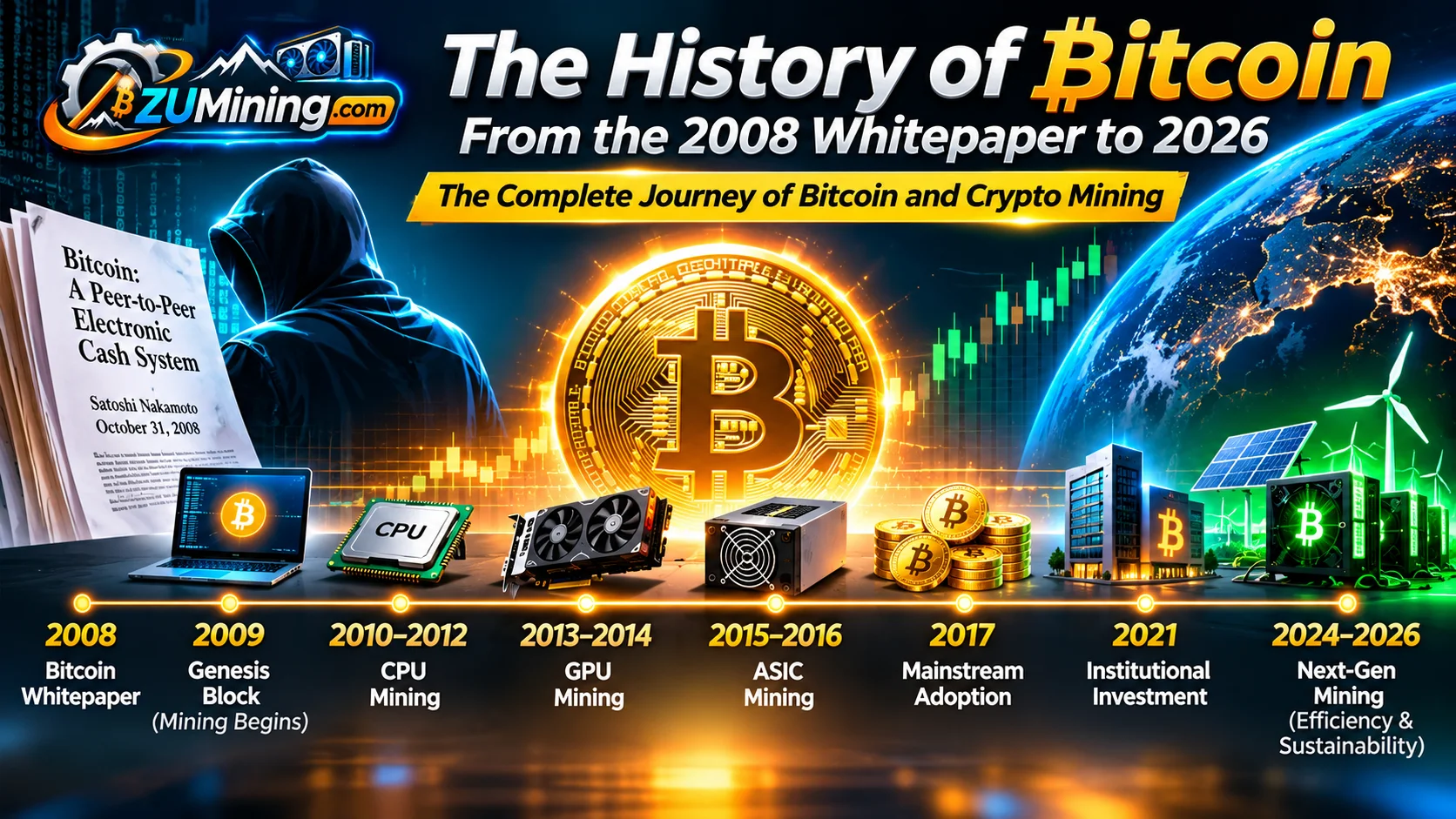
1. October 31, 2008: The Bitcoin Whitepaper
On October 31, 2008, Satoshi Nakamoto introduced a document titled Bitcoin: A Peer-to-Peer Electronic Cash System to a cryptography mailing list.
The document was only nine pages long, but it presented an ambitious solution to a problem that had challenged digital currency researchers for years.
How could people transfer digital money directly without relying on a trusted central intermediary?
Traditional digital payment systems generally depend on banks or payment processors to verify balances and prevent the same funds from being spent twice.
This is known as the double-spending problem.
Satoshi proposed a system combining several existing technologies:
Public-key cryptography for authorizing transactions.
A distributed, timestamped transaction ledger.
Proof-of-Work for establishing a shared transaction history.
Economic incentives for participants securing the network.
Rules that allow independent computers to verify the same blockchain.
The central innovation was not that every component was entirely new. It was the way these components worked together to create a functioning decentralized payment system.
The whitepaper described a network in which participants could independently verify transactions and agree on the valid history of payments.
That idea became the foundation of Bitcoin.
2. January 3, 2009: The Genesis Block
Bitcoin officially began operating on January 3, 2009, when Satoshi Nakamoto created its first block.
This is known as the Genesis Block, or Block 0.
Embedded in the block's coinbase data was a newspaper headline referring to a potential second bailout for banks:
The Times 03/Jan/2009 Chancellor on brink of second bailout for banks
The headline established a historical reference point for the block's creation. Many Bitcoin supporters also interpret it as commentary on the financial system of the time, although Satoshi did not provide a definitive explanation of its intended meaning.
The Genesis Block carried a 50 BTC block subsidy, but its original coinbase output cannot be spent under Bitcoin's implementation.
On January 9, 2009, Satoshi publicly announced Bitcoin version 0.1, making the early software available to other participants.
In those first days, Bitcoin had no established market price, no commercial mining farms, and no mainstream investment industry.
It was simply an open-source network running on a small number of computers.
3. What Was Bitcoin Mining Like in 2009?
Modern cryptocurrency mining often brings to mind industrial facilities filled with specialized machines.
Bitcoin mining in 2009 looked very different.
Early participants could use ordinary computer processors, known as CPUs, to perform the calculations required by Bitcoin's Proof-of-Work system.
A miner repeatedly calculates hashes while attempting to find a block header hash below the network's current target.
When a valid block is found and accepted by the network, the successful miner can receive the block subsidy and transaction fees according to Bitcoin's consensus rules.
In 2009, the block subsidy was 50 BTC.
The mining difficulty was initially extremely low compared with modern standards because the network had very little computational power.
A regular personal computer could participate in a way that would be economically unrealistic for most people today.
However, Bitcoin did not guarantee a profit even then. In its earliest period, BTC had little established monetary value, and miners were largely motivated by experimentation and interest in the technology.
Why mining matters
Mining performs two essential functions:
It helps establish the ordering and confirmation of Bitcoin transactions.
It makes rewriting the blockchain increasingly computationally expensive as additional blocks are added.
Mining is therefore more than a method of distributing new coins. It is part of the mechanism that helps protect Bitcoin's decentralized ledger.
4. January 12, 2009: The First Bitcoin Transaction
One of the earliest important events in Bitcoin's history occurred on January 12, 2009.
Satoshi Nakamoto sent 10 BTC to cryptographer and software developer Hal Finney.
Finney was among Bitcoin's earliest supporters and helped test the software.
This transaction demonstrated that Bitcoin could move between independent participants rather than existing only as a theoretical concept.
It was a small event at the time, but historically significant.
Bitcoin had moved beyond its original creator.
5. 2010: Bitcoin Begins to Acquire Real-World Value
In 2010, Bitcoin began transitioning from a technical experiment into something people could exchange for goods and services.
One famous milestone occurred on May 22, 2010.
Programmer Laszlo Hanyecz arranged to purchase two pizzas for 10,000 BTC.
The event later became known as Bitcoin Pizza Day.
The transaction is often remembered because the Bitcoin involved eventually became worth vastly more than the original purchase.
But its deeper significance was practical.
Someone had used Bitcoin in a real-world commercial exchange.
Around the same period, early trading platforms helped establish market prices for BTC.
Bitcoin was gradually developing an economic ecosystem beyond the small community of programmers who originally supported it.
6. 2010–2013: From CPU Mining to GPUs and ASICs
As interest in Bitcoin increased, miners began looking for more efficient ways to perform Proof-of-Work calculations.
The rise of GPU mining
During 2010, GPU-based Bitcoin mining emerged as an important technological development.
Graphics processing units were capable of performing many calculations in parallel, making them substantially more effective than typical CPUs for Bitcoin's SHA-256 mining workload.
This changed the competitive landscape.
Mining increasingly favored participants who could obtain efficient hardware and inexpensive electricity.
Mining pools become important
As the network's total hash rate increased, finding a block independently became more difficult for smaller miners.
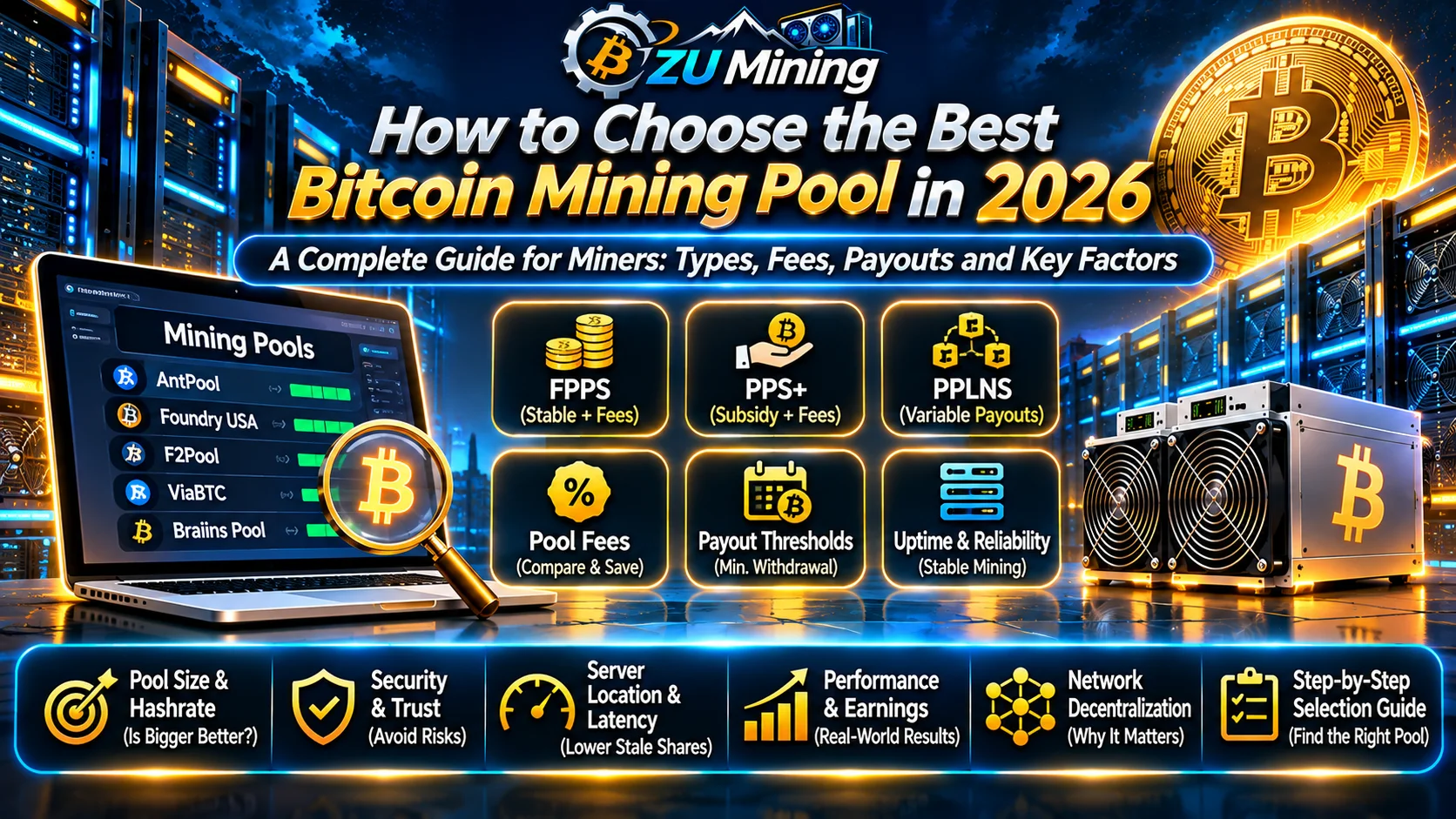
Mining pools offered a way for participants to combine computational power and share rewards according to the pool's payout rules.
Slush Pool, launched in 2010, became one of the earliest influential Bitcoin mining pools.
Pooling did not eliminate mining risk, but it helped participants receive smaller, more regular payouts instead of waiting unpredictably for an individual block discovery.
ASIC mining transforms the industry
Bitcoin mining underwent another major transition when specialized ASIC miners became commercially available in 2013.
ASIC stands for Application-Specific Integrated Circuit.
Unlike a CPU or GPU, a Bitcoin mining ASIC is designed specifically for the calculations needed by its supported mining algorithm.
ASIC hardware offered dramatic improvements in mining performance and energy efficiency.
Over time, this made ordinary CPU and GPU Bitcoin mining economically uncompetitive under typical conditions.
The transition helped create the modern Bitcoin mining hardware industry.
For a closer comparison of hardware types, explore our ASIC vs. GPU vs. CPU Mining Guide.
7. 2012: Bitcoin's First Halving
Bitcoin has a predefined monetary issuance schedule.
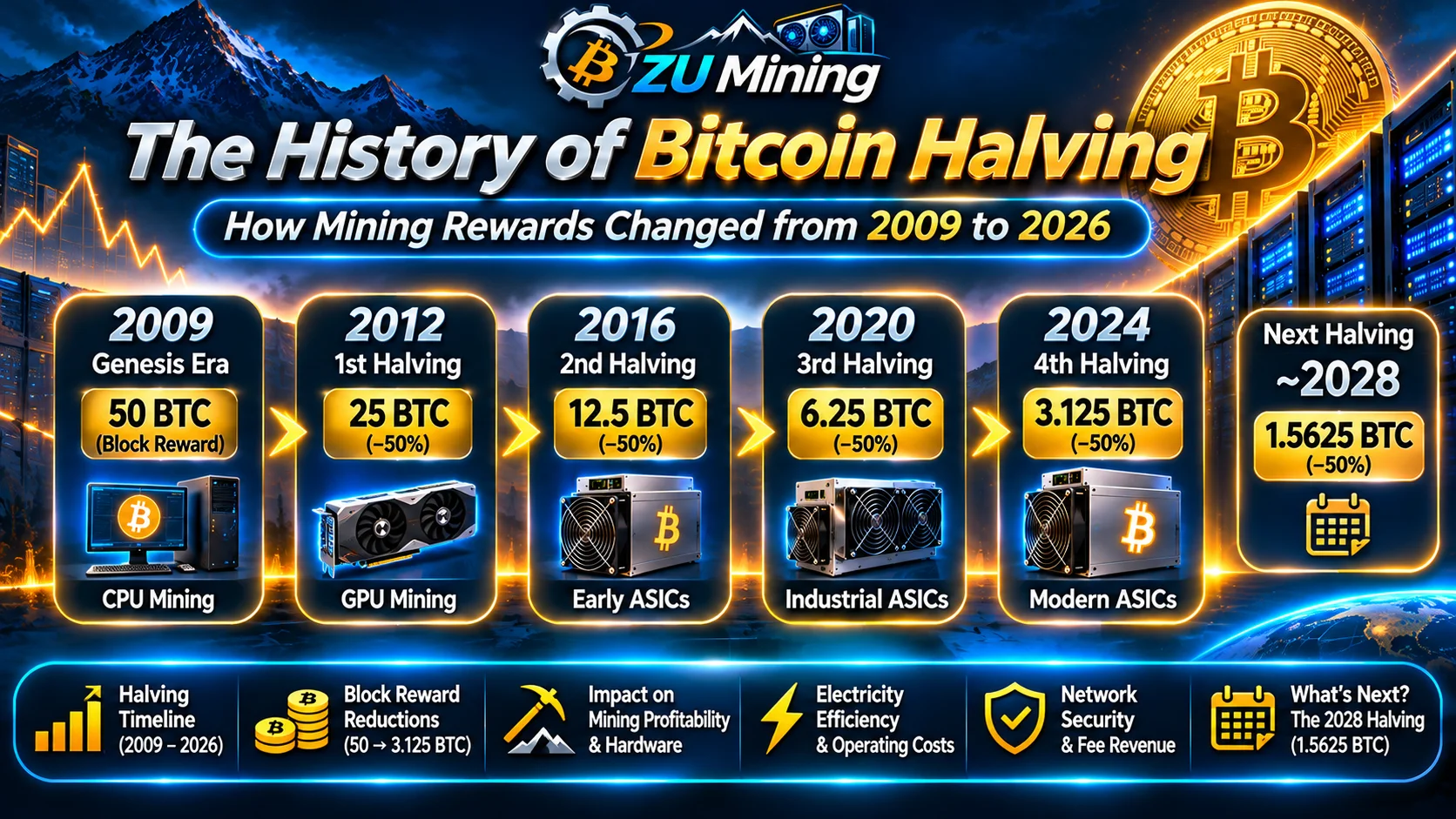
Approximately every 210,000 blocks, the block subsidy is reduced by half.
This event is called a Bitcoin halving.
The first halving occurred on November 28, 2012.
The subsidy declined from 50 BTC to 25 BTC per block.
This was an important demonstration that Bitcoin's issuance rules could operate without a central authority deciding when to create additional coins.
Bitcoin's total supply is capped at approximately 21 million BTC under its consensus rules.
The subsidy will continue decreasing over future halvings until it eventually becomes zero, with miners then relying on transaction fees.
Bitcoin's major halving milestones
| Year | Block Height | Subsidy After Halving |
|---|---|---|
| 2012 | 210,000 | 25 BTC |
| 2016 | 420,000 | 12.5 BTC |
| 2020 | 630,000 | 6.25 BTC |
| 2024 | 840,000 | 3.125 BTC |
Halving events matter to miners because they reduce the number of newly issued bitcoins available per block.
However, they do not automatically guarantee a higher Bitcoin price.
Mining profitability also depends on network difficulty, transaction fees, hardware efficiency, electricity costs, and market conditions.
8. 2013–2017: Bitcoin Becomes a Global Phenomenon
Between 2013 and 2017, Bitcoin became increasingly visible outside technical communities.
More exchanges, wallet providers, businesses, and developers entered the ecosystem.
Bitcoin also experienced major challenges.
The collapse of Mt. Gox in 2014 exposed serious risks associated with centralized cryptocurrency exchanges and inadequate custody practices.
It highlighted an important distinction: Bitcoin's underlying network and the companies providing services around it are not the same thing.
A cryptocurrency exchange can fail even when the blockchain itself continues operating.
During this period, debates about Bitcoin's transaction capacity and scalability became increasingly prominent.
In 2017, Segregated Witness, commonly known as SegWit, activated on Bitcoin.
SegWit changed how certain transaction data is represented and helped increase effective transaction capacity while addressing transaction malleability.
The same year, Bitcoin attracted enormous public attention during a major market rally.
By the end of 2017, cryptocurrency had become a widely discussed financial and technological subject.
9. 2018–2020: Mining Becomes a Professional Industry
As Bitcoin matured, mining operations became more sophisticated.
Industrial miners began focusing on factors such as:
Hardware acquisition costs.
Electricity pricing.
Cooling and ventilation.
Mining pool fees.
Machine reliability and maintenance.
Network difficulty.
Revenue forecasting and risk management.
Mining was no longer simply a matter of leaving a computer running overnight.
It increasingly required careful operational planning.
In May 2020, Bitcoin completed its third halving, reducing the block subsidy to 6.25 BTC.
This placed additional pressure on less efficient mining operations.
Miners with expensive electricity or outdated hardware could become unprofitable even while technically operating correctly.
That is why realistic profitability calculations are essential.
Our Mining Profitability Calculator can help users explore how electricity prices and hardware assumptions influence estimated results.
10. 2021: Bitcoin Mining Faces a Major Geographic Shift
In 2021, China intensified restrictions on cryptocurrency mining.
A significant amount of mining activity previously concentrated in China relocated or shut down.
Bitcoin's total network hash rate fell sharply during the disruption before recovering as equipment was redeployed and new capacity came online elsewhere.
This episode illustrated both the physical realities and the resilience of Bitcoin mining.
Mining depends on electricity, equipment, buildings, regulations, and logistics.
At the same time, Bitcoin's network continued producing blocks through its difficulty adjustment mechanism.
The events of 2021 also accelerated discussions about the geographic distribution of mining, energy consumption, and regulatory uncertainty.
11. 2022–2023: Bitcoin Continues While the Crypto Industry Changes
The wider cryptocurrency market experienced considerable turbulence in 2022.
Several major crypto businesses failed or encountered severe financial difficulties.
For Bitcoin users, these events reinforced the importance of understanding custody, counterparty risk, and the difference between decentralized networks and centralized service providers.
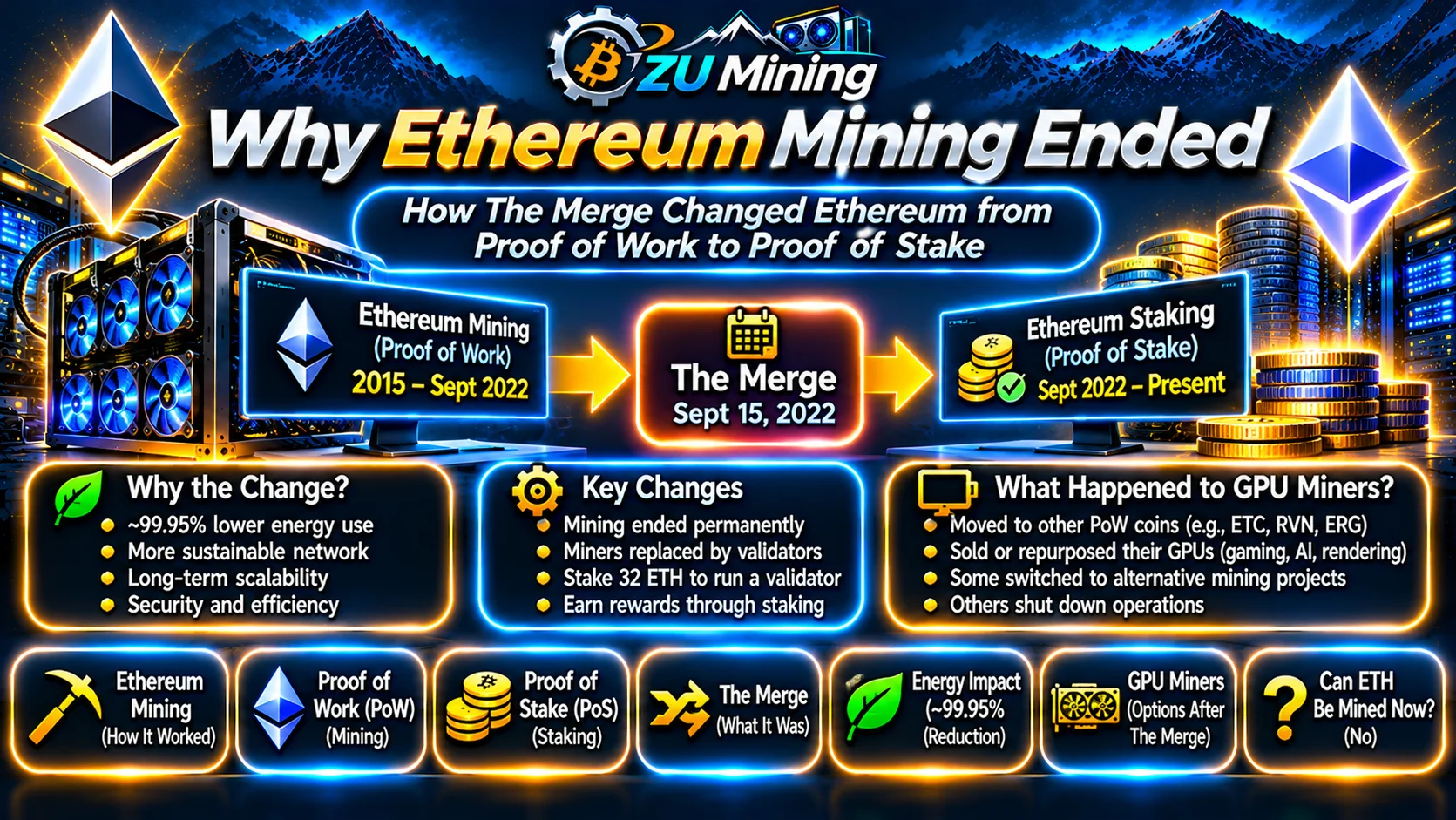
Another major industry event occurred in September 2022, when Ethereum completed The Merge, transitioning from Proof-of-Work to Proof-of-Stake.
Ethereum mining ended as part of that transition.
Bitcoin, however, continued using Proof-of-Work.
This distinction remains essential when comparing cryptocurrencies.
Not every blockchain uses mining, and not every cryptocurrency can be mined with GPUs or ASICs.
In 2023, Bitcoin Ordinals and inscription activity also brought renewed attention to how people use Bitcoin block space.
These developments generated debate about fees, transaction demand, and the network's intended use.
12. 2024: Spot Bitcoin ETFs and the Fourth Halving
The year 2024 marked another significant chapter in Bitcoin's development.
In January 2024, the United States Securities and Exchange Commission approved the listing and trading of several spot Bitcoin exchange-traded products.
These products created additional regulated-market routes for investors seeking Bitcoin price exposure.
The approvals did not mean the SEC endorsed Bitcoin itself or removed the risks associated with cryptocurrency investments.
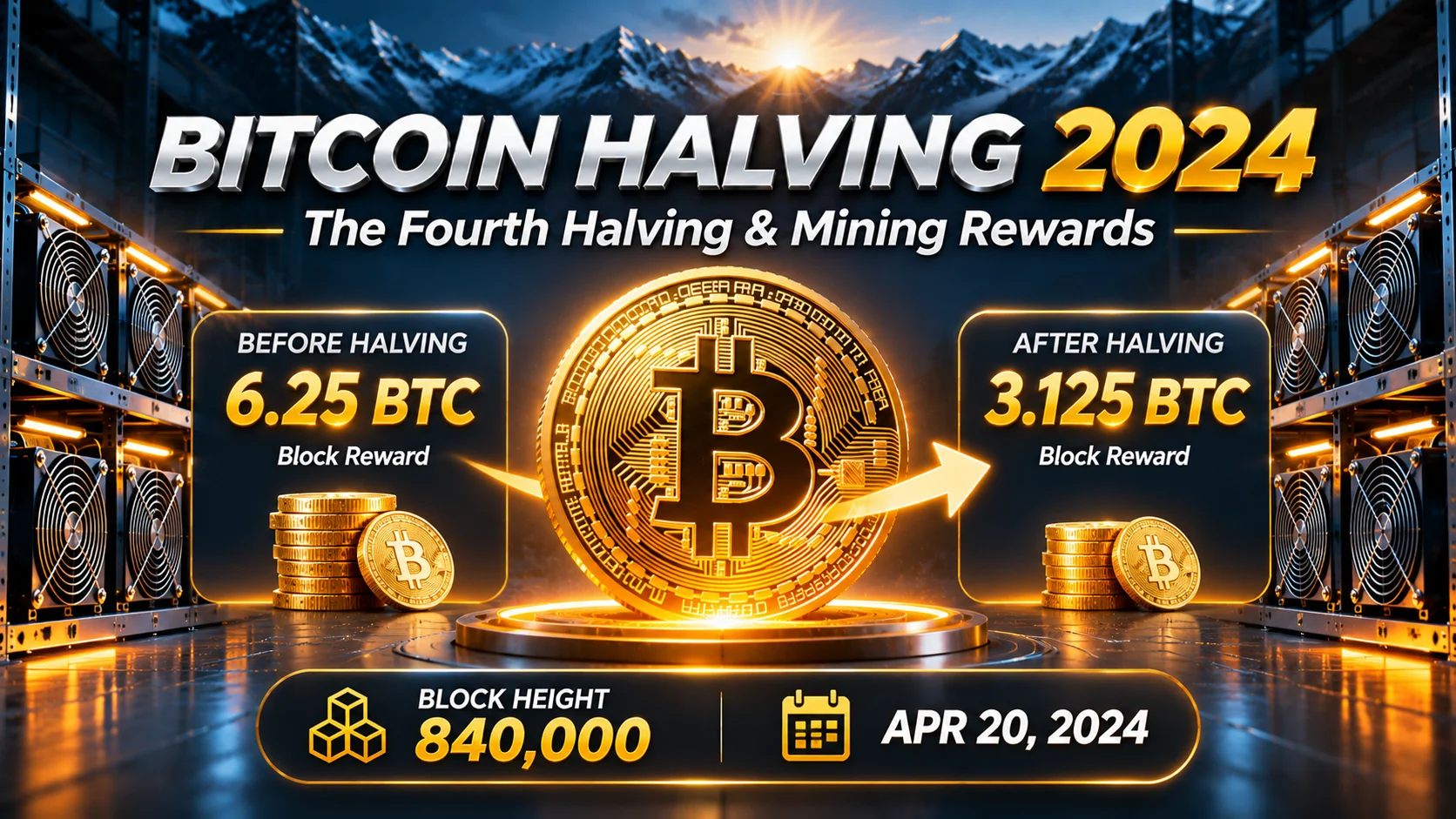
On April 20, 2024, Bitcoin reached block 840,000 and completed its fourth halving.
The block subsidy fell from 6.25 BTC to 3.125 BTC.
For miners, this was a major economic adjustment.
A mining operation receiving the same proportion of network rewards would earn fewer newly issued bitcoins per block unless other factors changed.
Transaction fees, Bitcoin's market price, electricity costs, and hardware efficiency therefore became even more important to profitability.
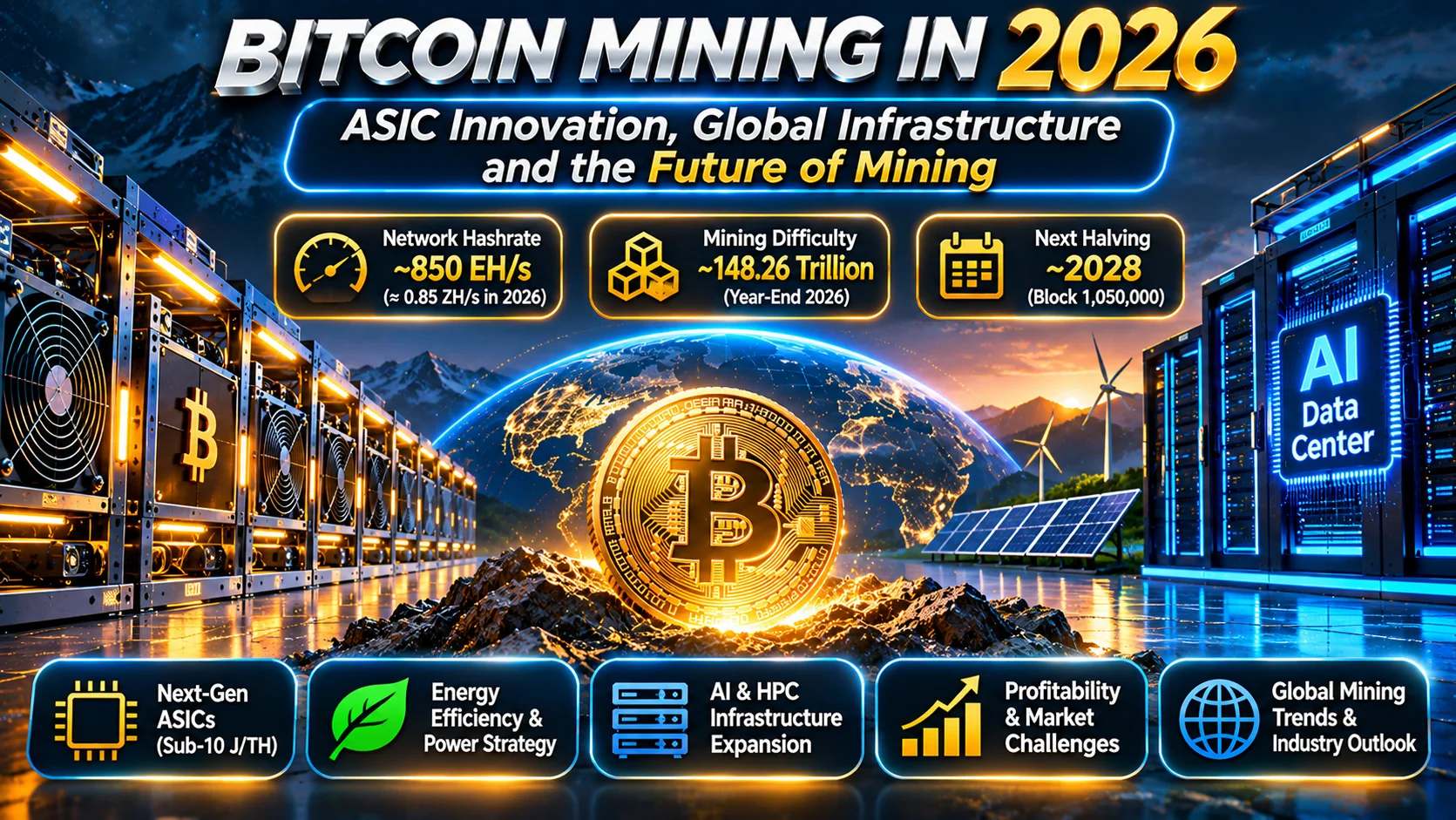
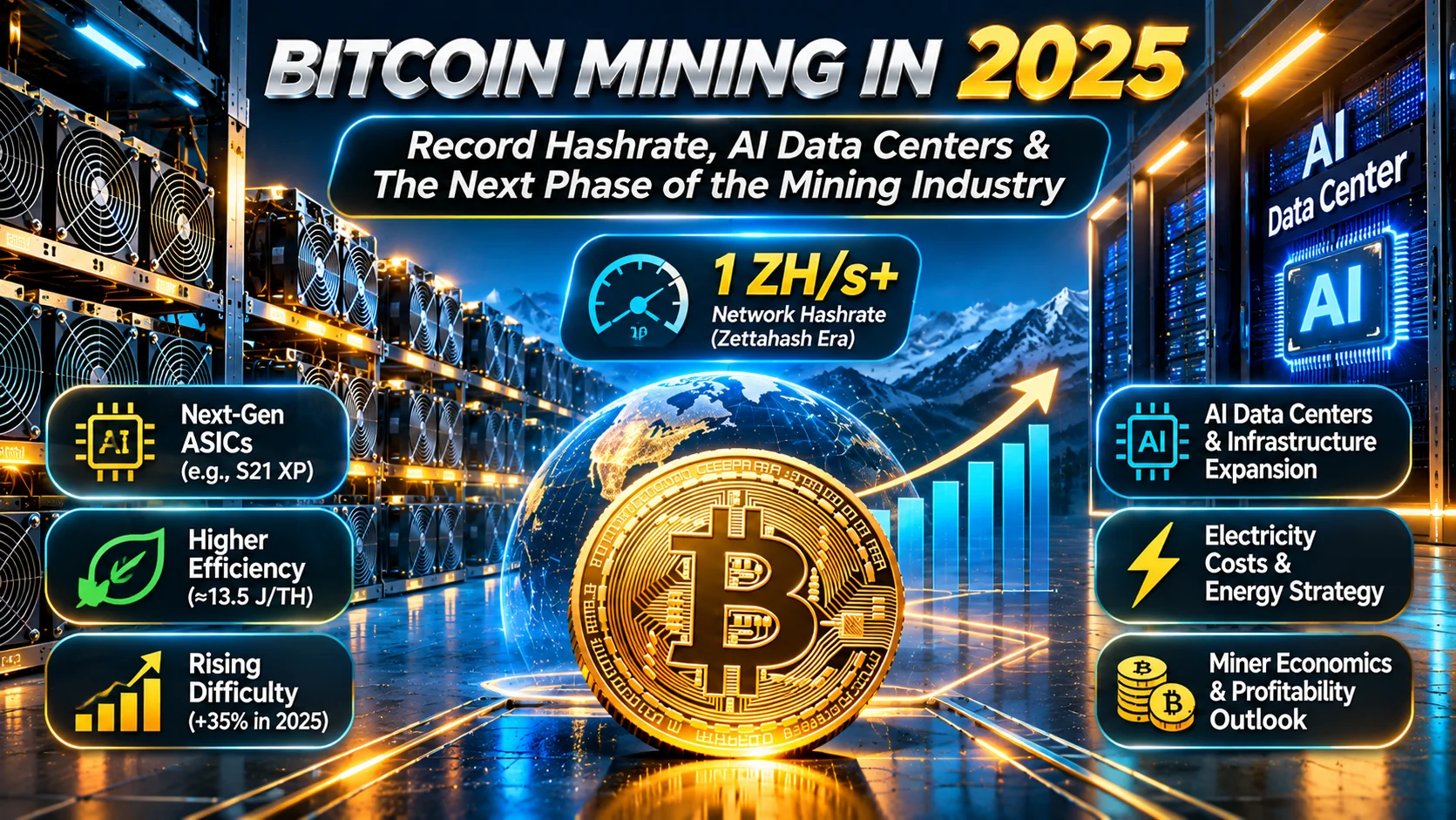
13. Bitcoin Mining in 2025–2026: Efficiency Matters More Than Ever
By 2025 and 2026, Bitcoin mining had become a highly specialized industry.
Modern operations rely heavily on purpose-built ASIC equipment, power management, cooling infrastructure, and detailed financial modeling.
The industry continues to explore ways to improve efficiency, including advanced cooling systems, energy management, and the use of otherwise curtailed or underutilized electricity.
Some operators also explore heat reuse and flexible electricity consumption arrangements.
These approaches can offer benefits in particular circumstances, but their economic and environmental outcomes depend on the actual energy source, local conditions, and operating practices.
It is important not to assume that all mining is environmentally sustainable or that all renewable-energy claims are equally supported.
What determines mining profitability today?
A realistic mining estimate should account for:
Hardware efficiency: How much electricity a machine uses for its computational output.
Electricity price: The cost per kilowatt-hour, including applicable charges.
Network difficulty: The amount of work required to find a valid Bitcoin block.
Bitcoin price: The market value of mining rewards, which can change rapidly.
Pool fees and payout rules: The costs and methods associated with pooled mining.
Operating expenses: Cooling, maintenance, hosting, downtime, and equipment depreciation.
A powerful miner is not necessarily a profitable miner.
The difference comes down to the economics of the complete operation.
Readers can explore these factors using ZU Mining's Mining Profitability Calculator and Mining Hardware Directory.
Note: GPU profitability tools are not a substitute for a dedicated Bitcoin ASIC profitability estimate. Use hardware- and algorithm-appropriate inputs.
14. What Makes Bitcoin Different?
Bitcoin's importance extends beyond its market price.
Several characteristics distinguish it from conventional digital payment systems.
A decentralized verification network
Bitcoin allows independent participants to validate transactions and blocks against publicly defined consensus rules.
A transparent monetary schedule
The block subsidy and issuance rules are predictable rather than adjusted through routine central-bank decisions.
A public blockchain
Anyone can inspect Bitcoin's transaction history using publicly available software and block explorers.
Proof-of-Work security
Miners compete to produce valid blocks, while independently operated nodes enforce the network's rules.
Global participation
Bitcoin can be used across borders, although practical access, regulations, fees, and infrastructure differ between jurisdictions.
These characteristics also come with trade-offs.
Bitcoin transactions may have variable fees, confirmation delays, price volatility, privacy limitations, and custody risks.
Understanding both its capabilities and limitations is essential.
15. What Comes Next for Bitcoin?
No one can predict Bitcoin's future with certainty.
Its long-term development will depend on several interconnected factors, including technological improvements, adoption, regulation, energy economics, security, and user demand.
For miners, the central question is increasingly straightforward:
Can an operation generate enough revenue from block rewards and transaction fees to cover its complete costs?
As future halvings reduce the block subsidy, transaction-fee economics and efficient operations will remain important subjects of research and discussion.
Bitcoin's history demonstrates how far an experimental open-source project can develop.
But its future will not be determined by history alone.
It will depend on how effectively the network and its participants respond to new challenges.
Conclusion: From an Idea to a Global Network
Bitcoin began with a nine-page whitepaper published under a pseudonym.
Its first block was created in January 2009.
Its earliest miners used ordinary computers.
Over the following years, Bitcoin experienced technological breakthroughs, financial speculation, exchange failures, regulatory challenges, mining hardware revolutions, and growing institutional attention.
By 2026, it had developed into an established global blockchain network supported by specialized mining infrastructure and a broad ecosystem of users, developers, businesses, and service providers.
The most important lesson from Bitcoin's history is not that every prediction about it came true.
It is that a decentralized digital payment experiment continued operating and evolving through years of substantial technological and economic change.
For anyone interested in cryptocurrency mining, understanding that history is an excellent place to begin.
Frequently Asked Questions
Who created Bitcoin?
Bitcoin was introduced by an unknown person or group using the pseudonym Satoshi Nakamoto. The creator's real-world identity has not been conclusively established.
When was Bitcoin invented?
The Bitcoin whitepaper was published on October 31, 2008. The Bitcoin network began operating with the Genesis Block on January 3, 2009.
Who received the first Bitcoin transaction?
Hal Finney received 10 BTC from Satoshi Nakamoto on January 12, 2009, in the first widely recognized person-to-person Bitcoin transaction.
Could people mine Bitcoin with ordinary computers in 2009?
Yes. Early Bitcoin miners used CPUs because network competition was extremely low compared with modern conditions.
When did Bitcoin ASIC mining begin?
Commercial Bitcoin ASIC mining emerged in 2013, following earlier CPU, GPU, and FPGA mining developments.
What was Bitcoin's block reward in 2009?
The original block subsidy was 50 BTC. Following the fourth halving in April 2024, the subsidy became 3.125 BTC per block.
Can Bitcoin still be mined in 2026?
Yes. Bitcoin continues to use Proof-of-Work mining. However, competitive mining generally requires specialized ASIC hardware, suitable electricity pricing, and careful financial planning.
Is Bitcoin mining guaranteed to be profitable?
No. Profitability depends on hardware, electricity costs, network difficulty, transaction fees, Bitcoin's market price, and other operating expenses.
Historical References and Further Reading
Satoshi Nakamoto. Bitcoin: A Peer-to-Peer Electronic Cash System (2008). https://bitcoin.org/bitcoin.pdf
Bitcoin Core. Open-source Bitcoin implementation. https://bitcoincore.org/
Bitcoin Developer Documentation. https://developer.bitcoin.org/
U.S. Securities and Exchange Commission. Statement on spot Bitcoin exchange-traded products (January 10, 2024). https://www.sec.gov/newsroom/speeches-statements/gensler-statement-spot-bitcoin-011023
Ethereum.org. The Merge. https://ethereum.org/en/roadmap/merge/
Educational disclaimer: This article is for general information and does not constitute financial or investment advice.