Choosing Between ASIC, GPU, and CPU Mining Hardware
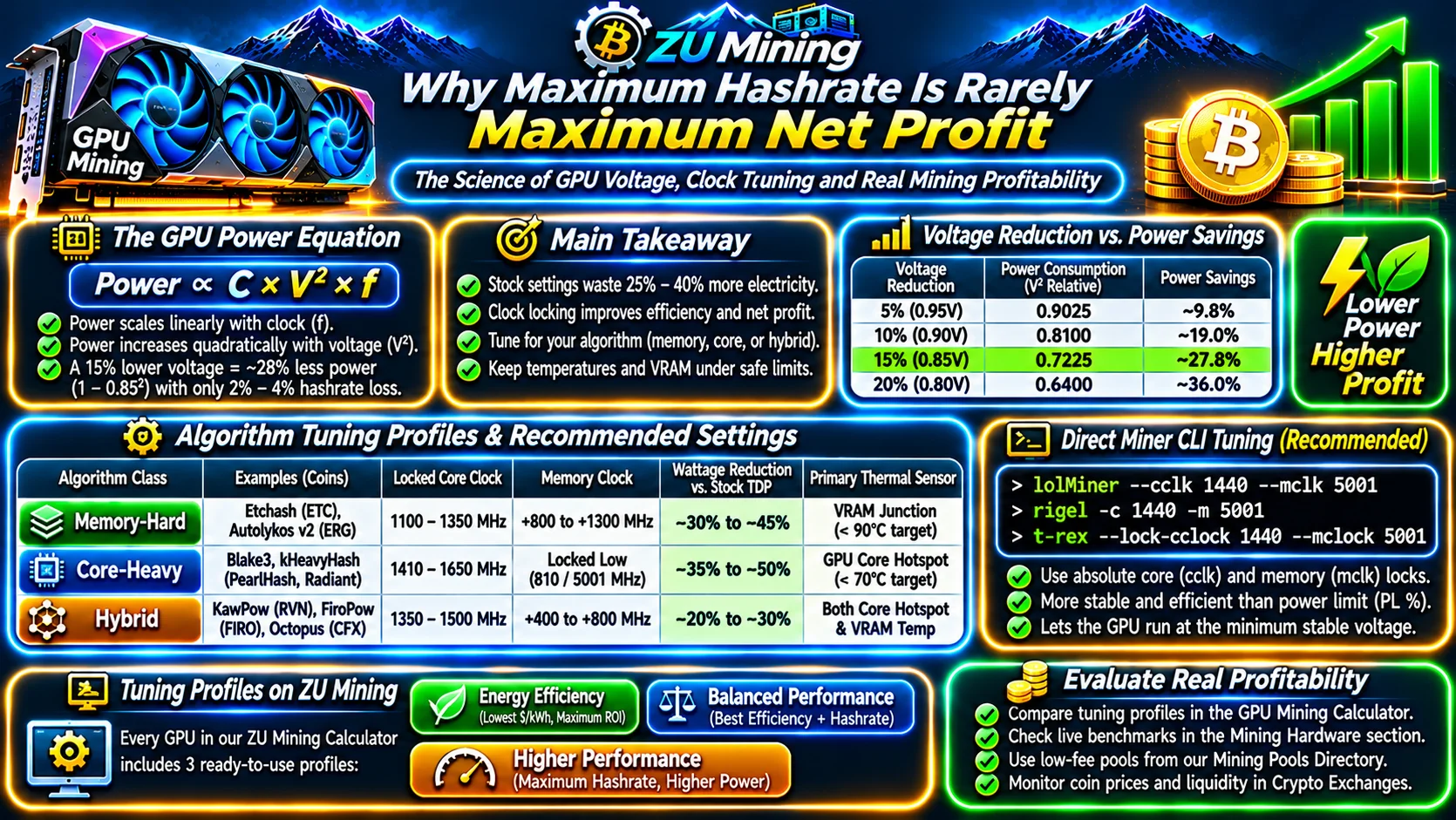
Proof-of-Work cryptocurrencies are secured by fundamentally different cryptographic hashing algorithms—some engineered for raw bitwise throughput and others designed with heavy memory-bandwidth or CPU cache requirements to resist specialized silicon. Before selecting equipment from our Mining Hardware Benchmarks & Smart Rig Builder, miners must evaluate how ASIC miners, GPU rigs, and multi-core CPU workstations compare across energy efficiency, facility requirements, and resale value.
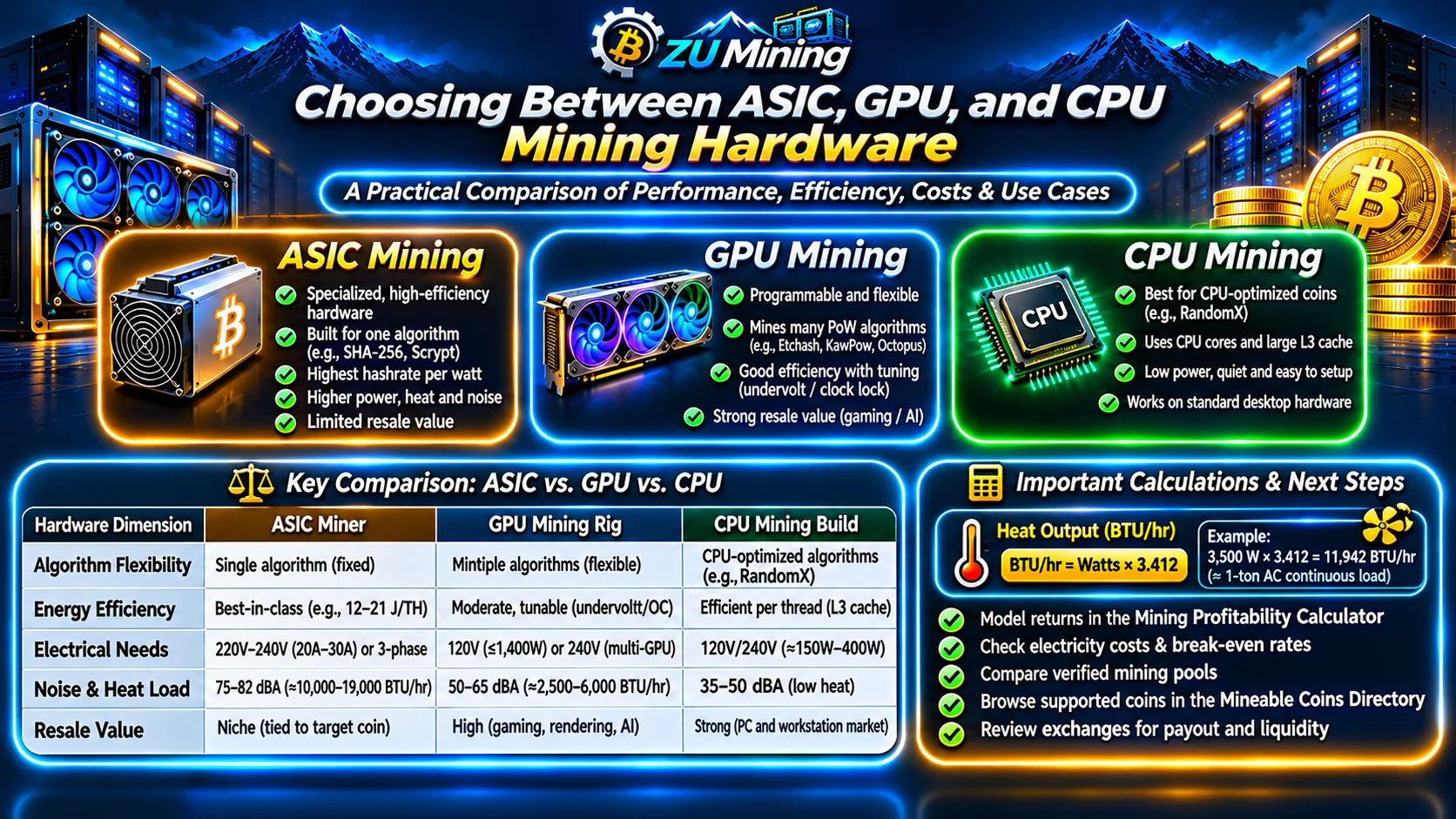
| Hardware Dimension | ASIC Miner (Fixed Silicon) | GPU Mining Rig (Programmable) | CPU Mining Build (Cache-Bound) |
|---|---|---|---|
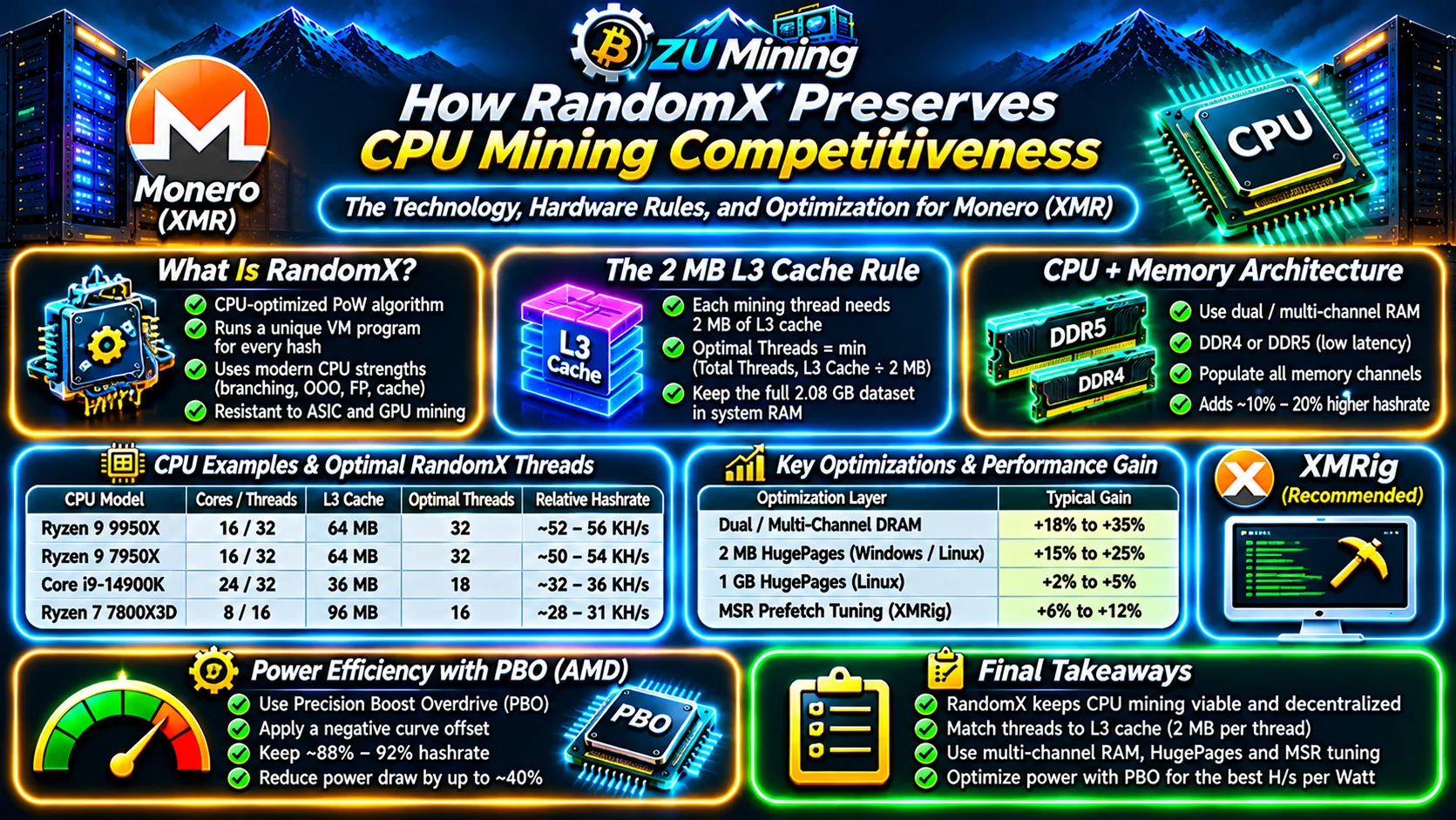
| Algorithm Flexibility | Single hardwired algorithm (e.g., SHA-256, Scrypt, kHeavyHash, Equihash) | Switches freely across dozens of GPU PoW algorithms (Etchash, KawPow, Octopus) | Optimized for L3-cache & VM algorithms (RandomX, GhostRider, VerusHash) |
| Energy Efficiency | Unmatched on target algorithm (12–21 J/TH on SHA-256) | Moderate; tunable via core clock locking and undervolting | High efficiency per thread when 2 MB L3 cache slices are respected |
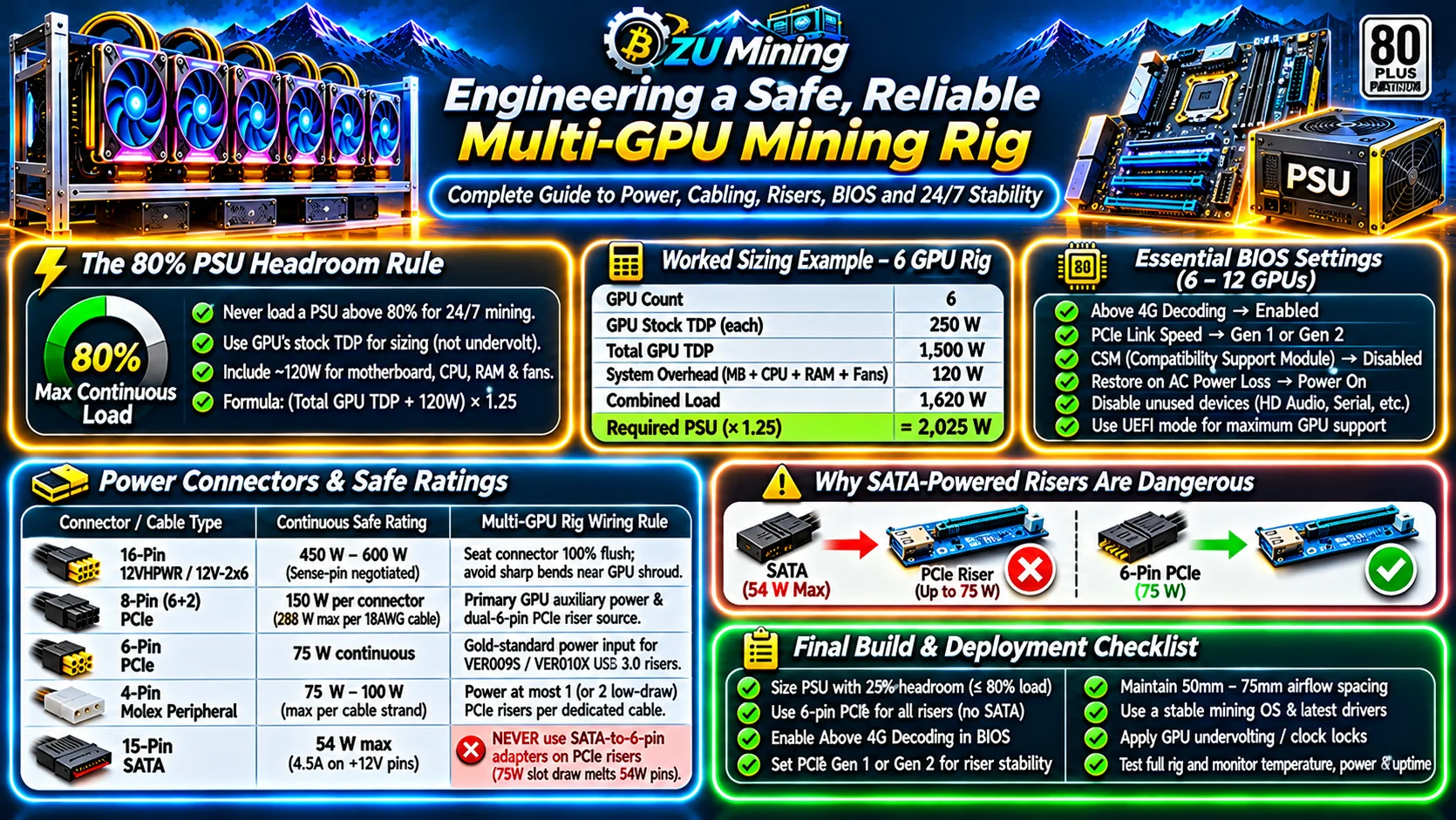
| Electrical Circuit Needs | Dedicated 200V–240V AC (20A–30A PDU) or 3-phase hydro power | Standard 120V (up to ~1,400W) or 240V circuit for 6–12 GPU frames | Standard 120V/240V ATX workstation power supply (150W–400W wall draw) |
| Acoustics & Heat Load | 75–82 dBA high-RPM axial fans (10,000–19,000 BTU/hr per unit) | 50–65 dBA open-frame axial fans (2,500–6,000 BTU/hr per rig) | 35–50 dBA whisper-quiet tower or 240mm/360mm AIO liquid cooler |
| Secondary Resale Market | Strictly tied to target coin profitability | Broad demand from gamers, 3D rendering studios, and AI/LLM inference | Strong resale liquidity in PC, homelab, and workstation markets |
1. ASIC Miners (Application-Specific Integrated Circuits)
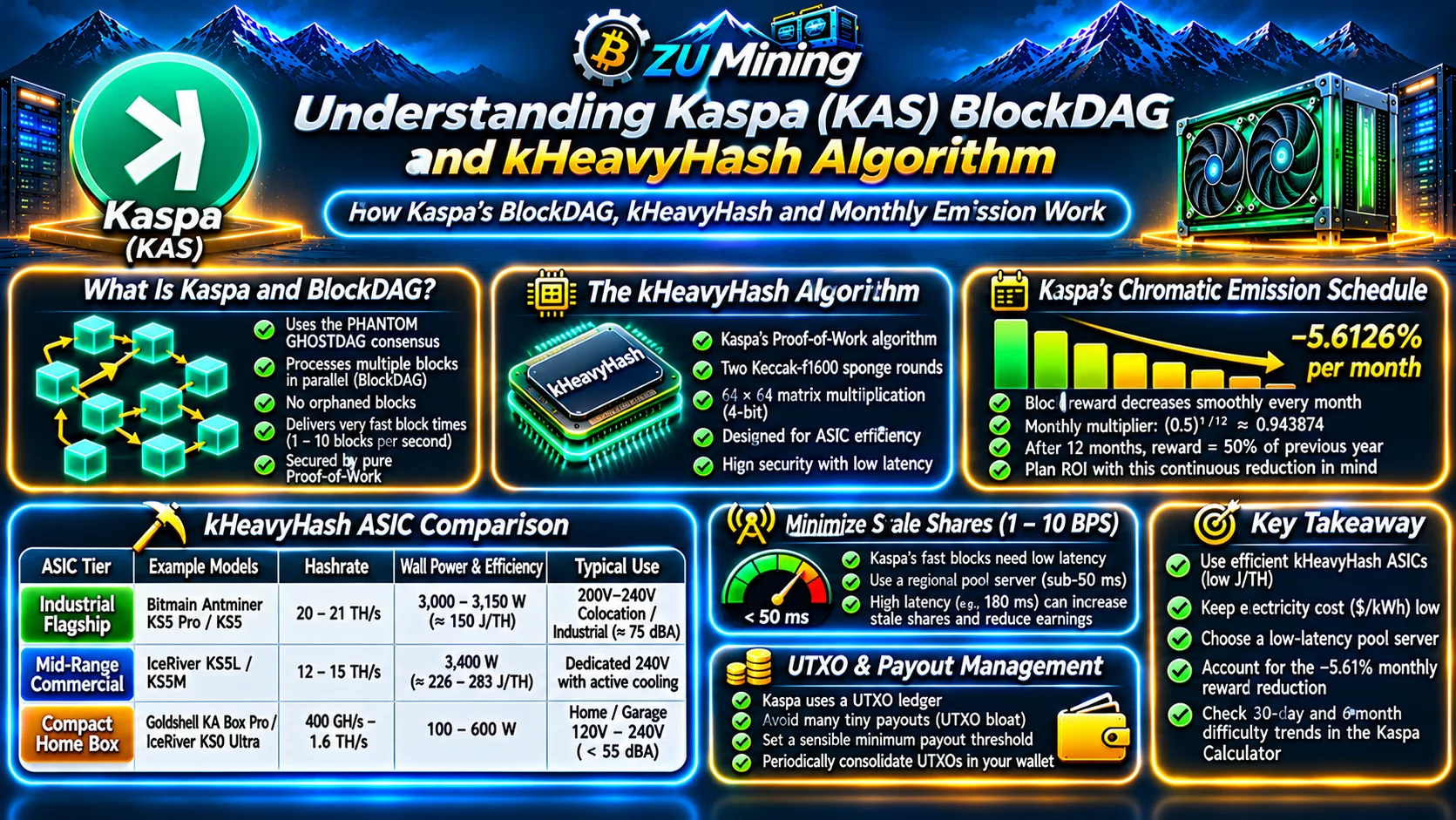
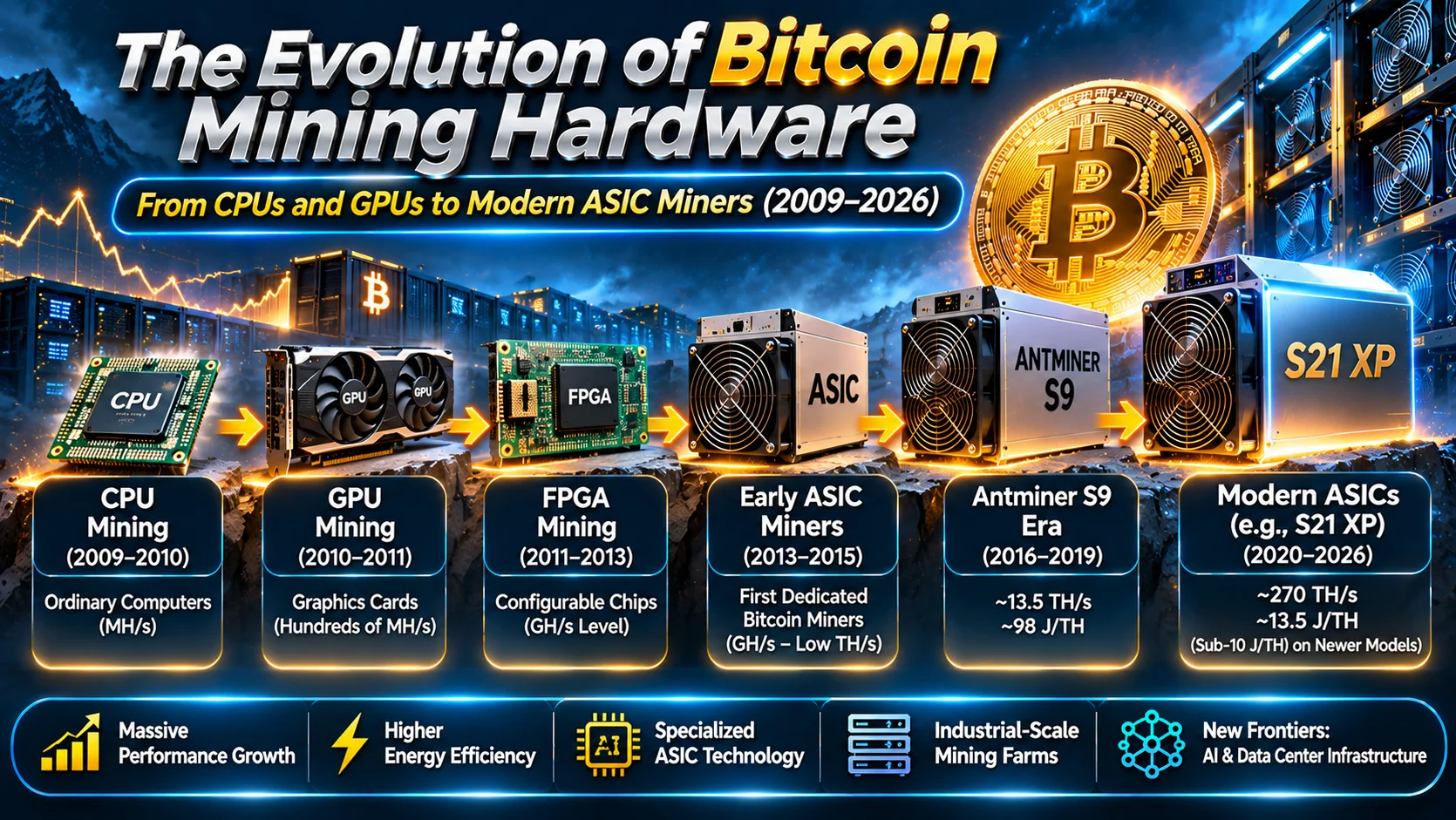
An ASIC miner contains hundreds of custom-fabricated silicon chips whose logic gates are physically etched to execute one cryptographic hash function—such as SHA-256 for Bitcoin, Scrypt for Litecoin and Dogecoin, kHeavyHash for Kaspa, Equihash for Zcash, or Blake2B-Sia for Siacoin. Eliminating general-purpose instruction decoders allows an ASIC to achieve 10,000× to 100,000× higher energy efficiency than a GPU on that specific algorithm.
However, ASICs carry two structural constraints: they cannot be reprogrammed to mine a different algorithm if their target coin's economics deteriorate, and full-size industrial units (drawing 3,000W to 5,600W+) require 220V–240V electrical circuits and dedicated acoustic/thermal ducting. Model live ASIC returns directly in our ASIC Mining Profitability Calculator.
2. GPU Mining Rigs (Graphics Processing Units)
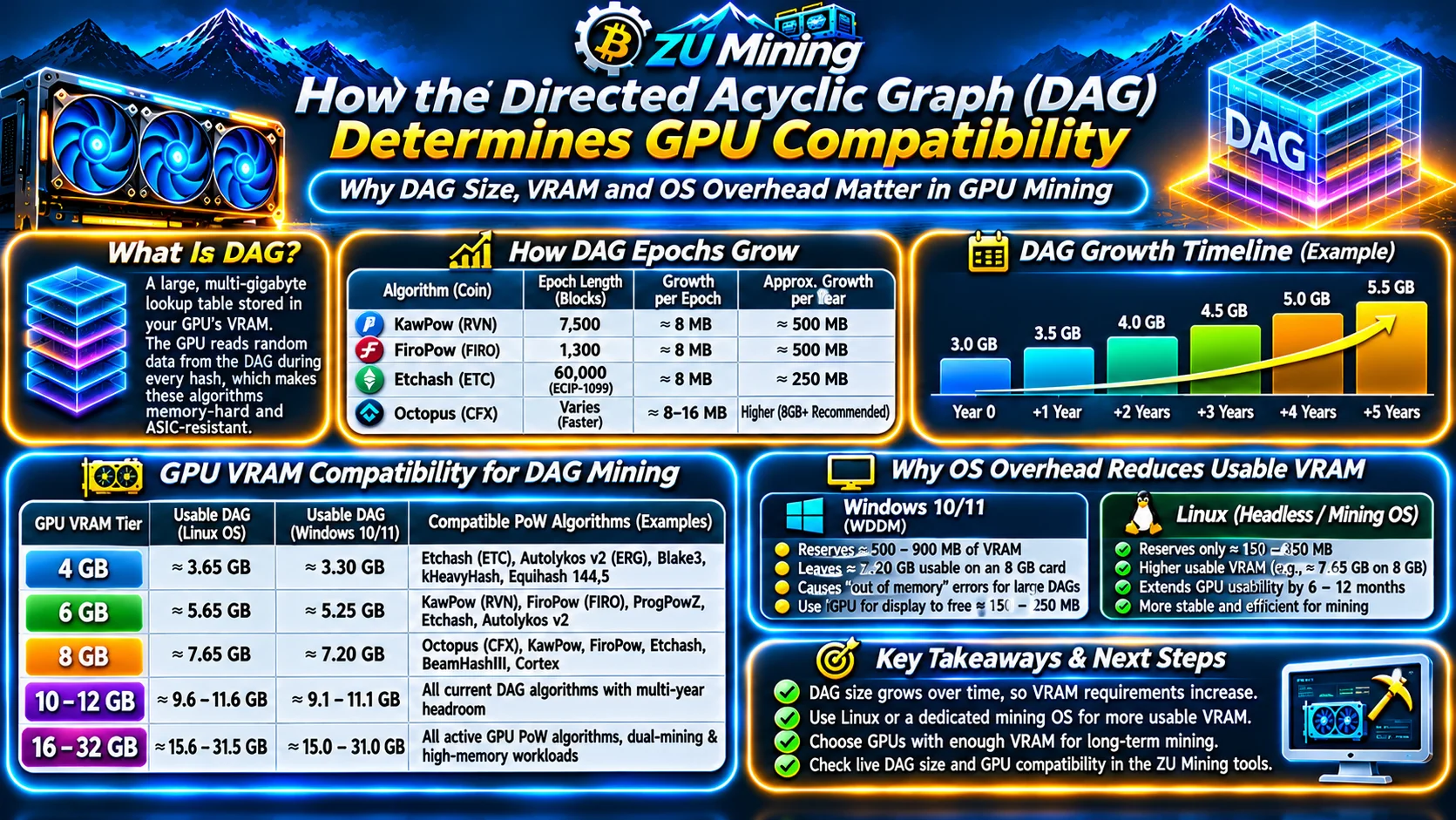
Modern NVIDIA GeForce RTX and AMD Radeon RX graphics cards combine thousands of parallel shader/CUDA cores with ultra-wide GDDR6, GDDR6X, or GDDR7 memory buses delivering up to 1,000+ GB/s of memory bandwidth. Many Proof-of-Work networks—including Ravencoin (KawPow), Ethereum Classic (Etchash), Conflux (Octopus), Ergo (Autolykos v2), and Firo (FiroPow)—require multi-gigabyte Directed Acyclic Graph (DAG) lookups in VRAM that starve fixed-function ASICs.
GPU miners can pivot between coins in seconds using verified GPU mining software and retain strong hardware salvage value because high-VRAM graphics cards are heavily sought after for local AI/LLM inference and gaming. Compare card-by-card yields in the GPU Mining Profitability Calculator.
CPU Mining & Electrical Facility Planning
3. CPU Mining (RandomX & L3 Cache Architectures)
Algorithms such as Monero's RandomX execute randomized virtual-machine programs that rely on out-of-order CPU instruction execution, branch predictors, and a 2 MB scratchpad stored inside ultra-low-latency CPU L3 cache. High-core-count AMD Ryzen 9 and EPYC processors excel at RandomX while operating quietly on standard household power—either as standalone systems or running concurrently on the host motherboard of a GPU rig. Check processor benchmarks in the CPU Mining Profitability Calculator.
Every Watt of electrical power consumed by an ASIC, GPU, or CPU is converted into heat that must be exhausted from your room. Multiply continuous wall wattage by 3.412 to calculate thermal output in BTU/hr: a single 3,500W ASIC produces 11,942 BTU/hr of continuous heat (equivalent to a 1-ton air conditioner running nonstop). Always review Electricity Costs & Break-Even Rates, compare verified mining pools, and inspect supported networks in our Mineable Coins Directory and Crypto Exchanges Directory.