
Cryptocurrency Mining Guides
Practical Proof-of-Work mining guides, hardware efficiency analysis, pool reward comparisons, and electricity cost tutorials from the ZU Mining team.
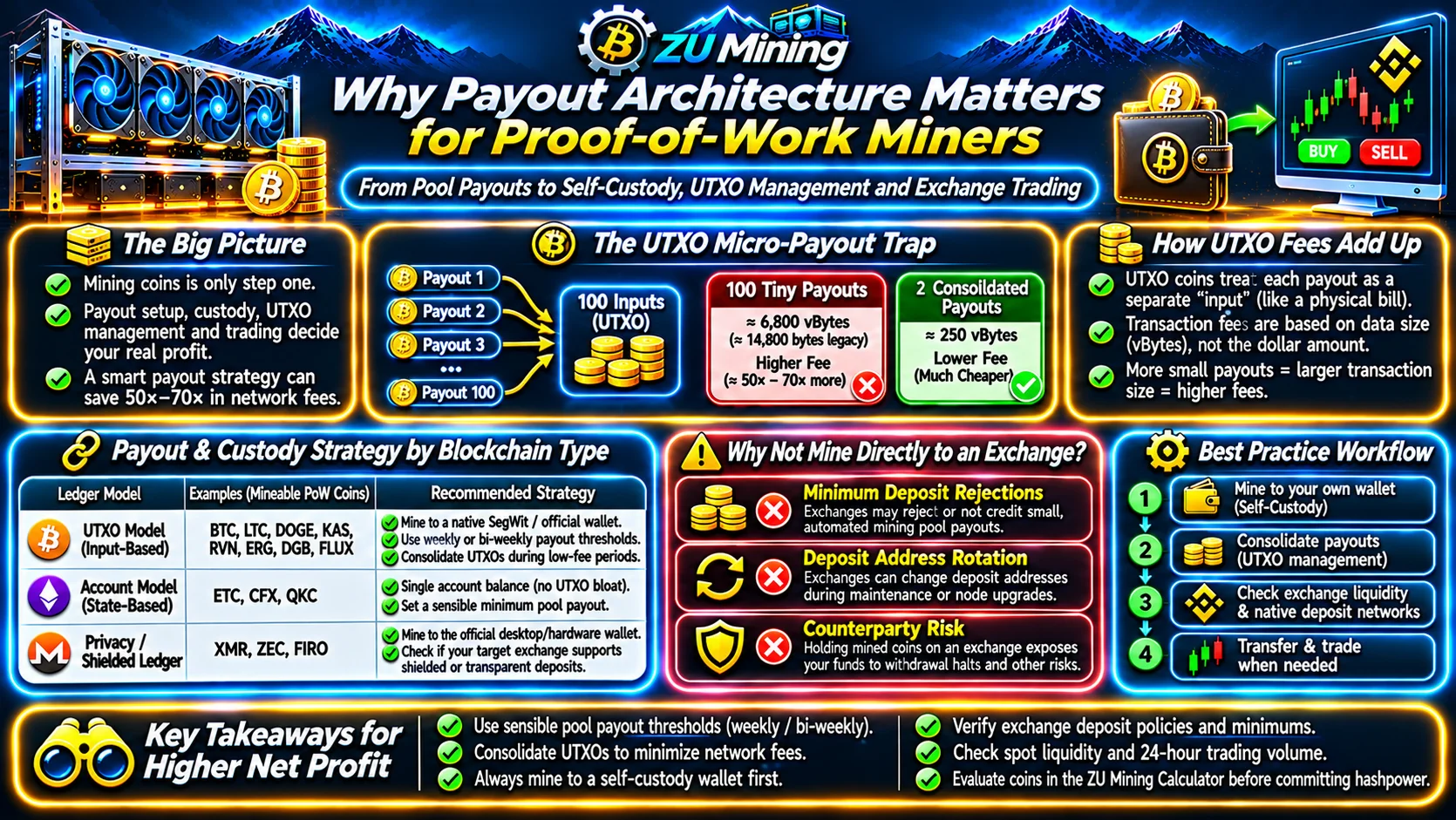
Managing Mining Payouts: UTXO Consolidation, Self-Custody Wallets & Exchange Liquidity
Learn best practices for receiving Proof-of-Work mining pool payouts, avoiding high UTXO transaction fees on self-custody wallets, and evaluating spot exchange liquidity.
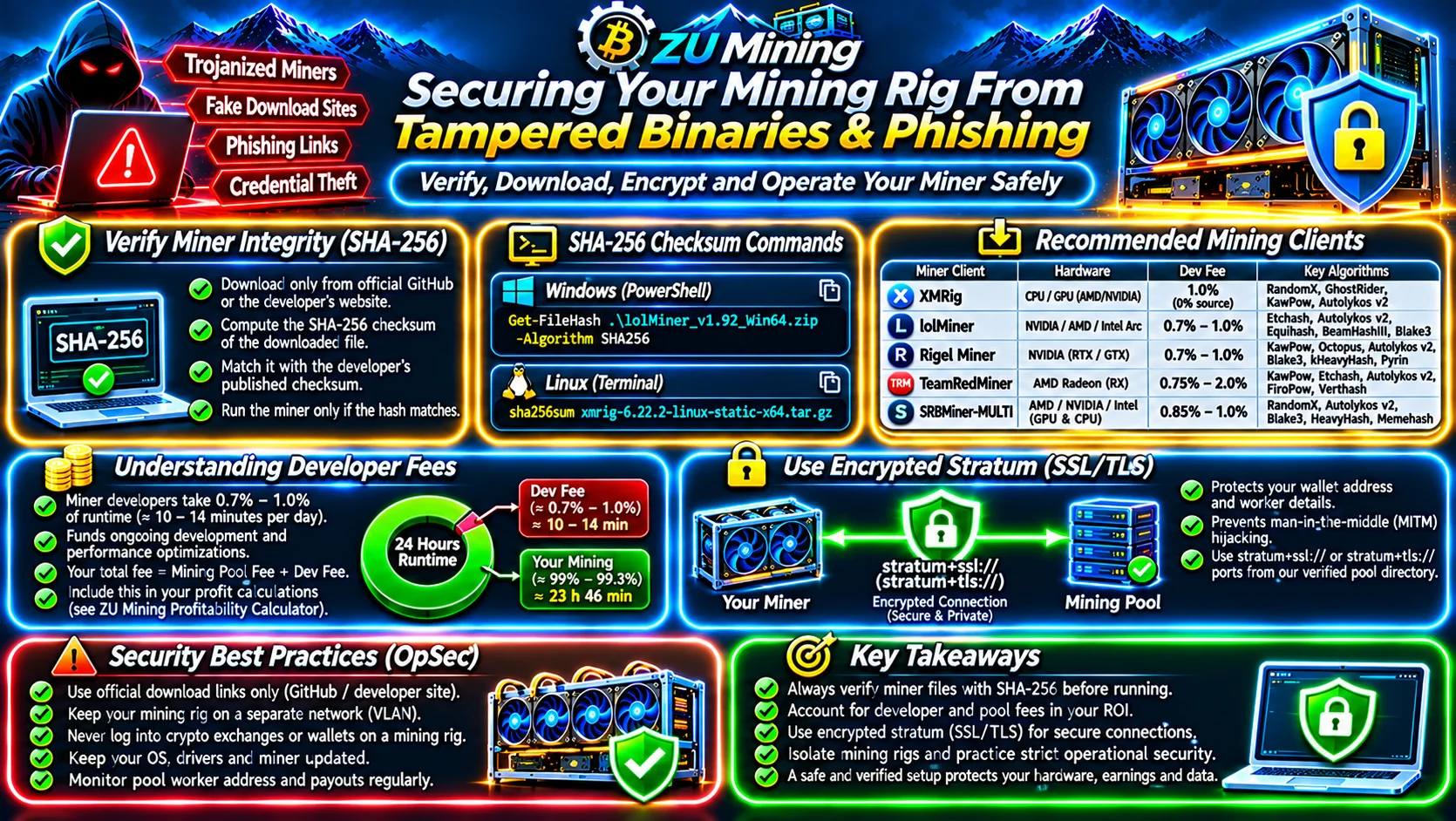
Mining Software Security Guide: Verifying SHA-256 Checksums, Dev Fees & Stratum TLS
Protect your GPU, CPU, and ASIC mining operations by verifying SHA-256 release checksums, understanding built-in developer fees, and enforcing encrypted Stratum TLS connections.
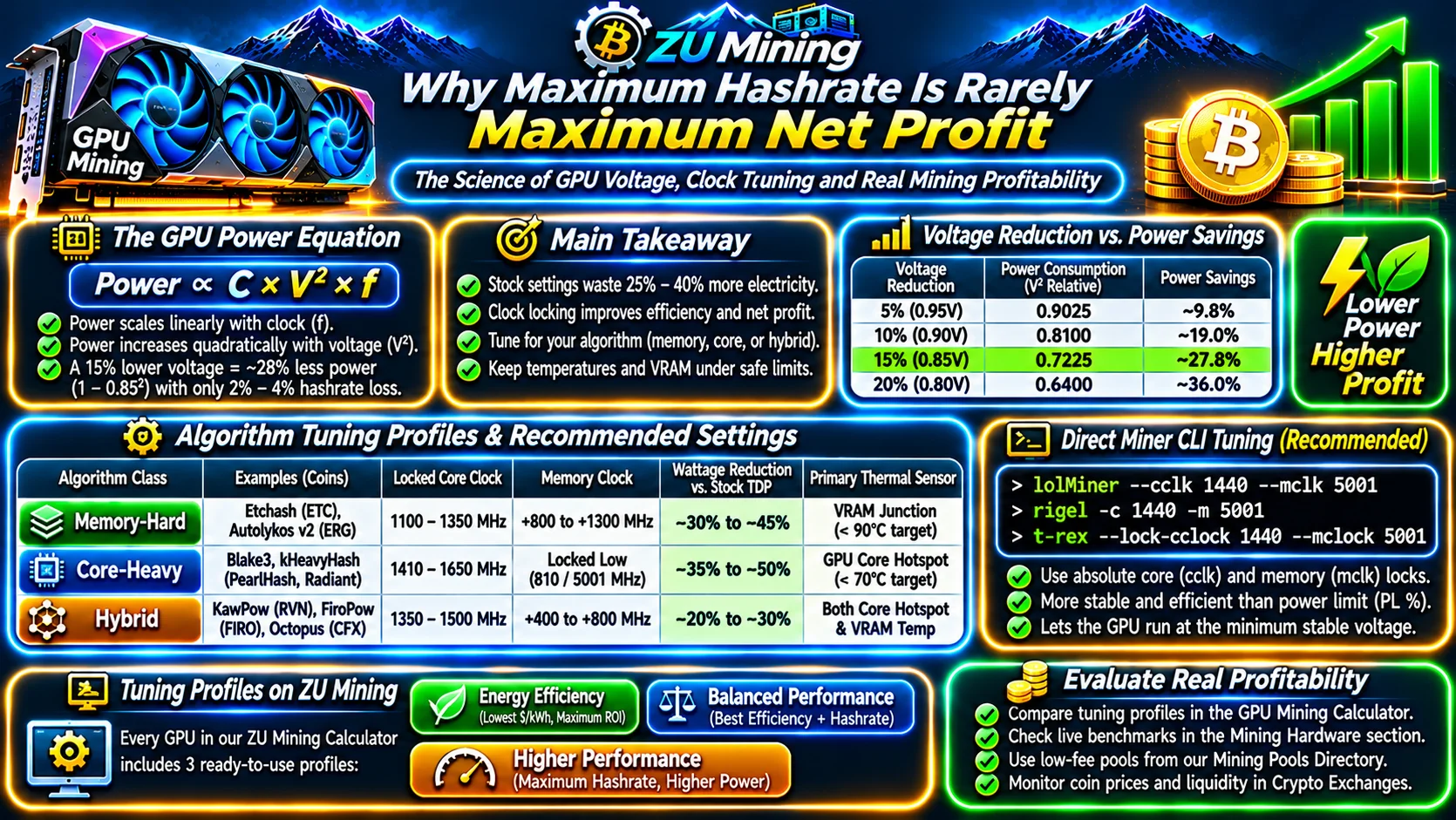
GPU Mining Efficiency Tuning: Core Clock Locking, Undervolting & Watt-Per-Hash Optimization
Learn how locking GPU core clocks and tuning memory frequencies reduces wall wattage and improves Joules-per-Megahash (J/MH) efficiency across PoW algorithms.
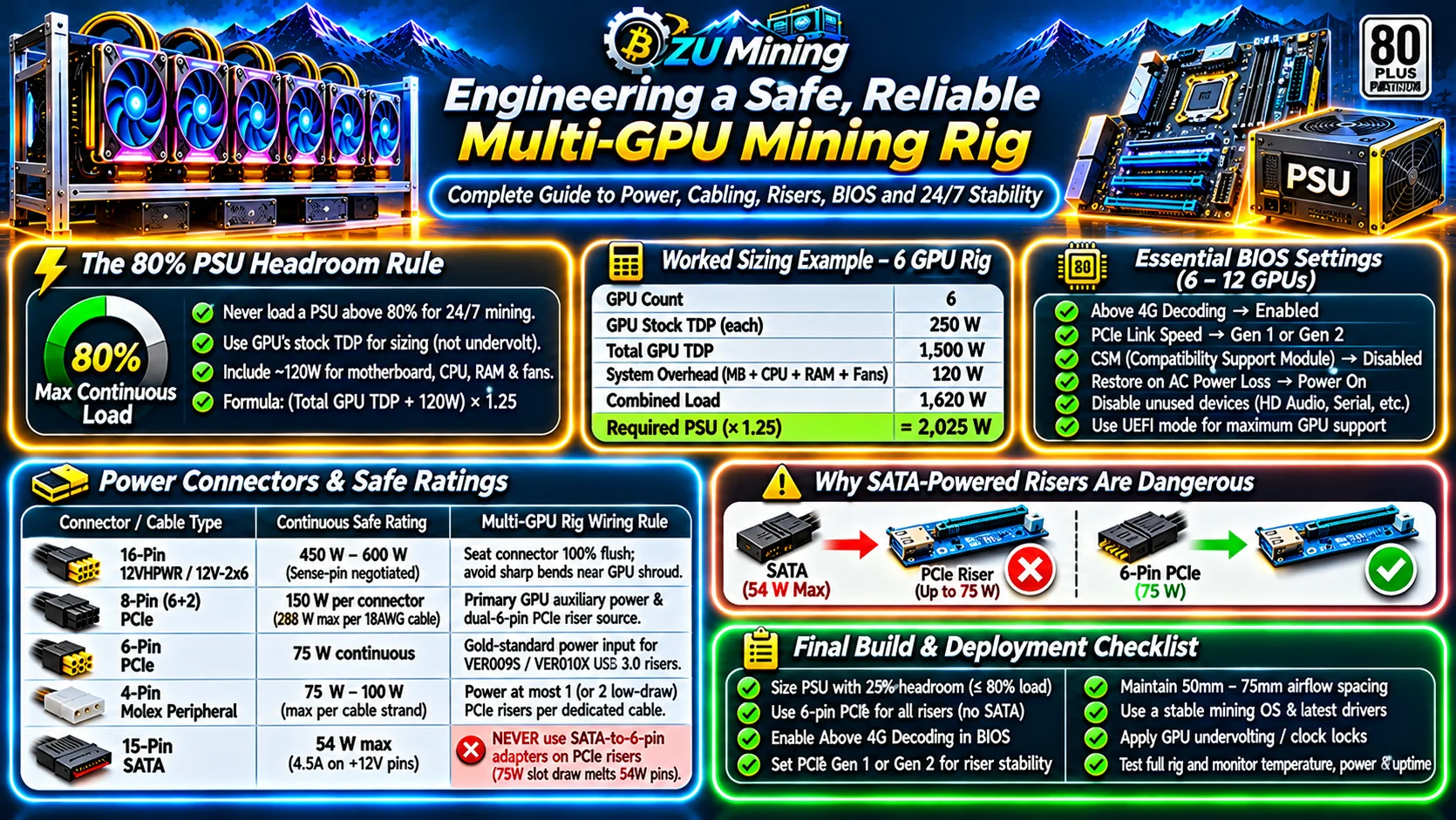
Multi-GPU Mining Rig Hardware Architecture: PCIe Risers, 80+ Titanium PSUs & Airflow
Master the electrical and mechanical fundamentals of multi-GPU mining rig builds, including the 80% continuous PSU load rule, PCIe riser wiring safety, and motherboard BIOS settings.
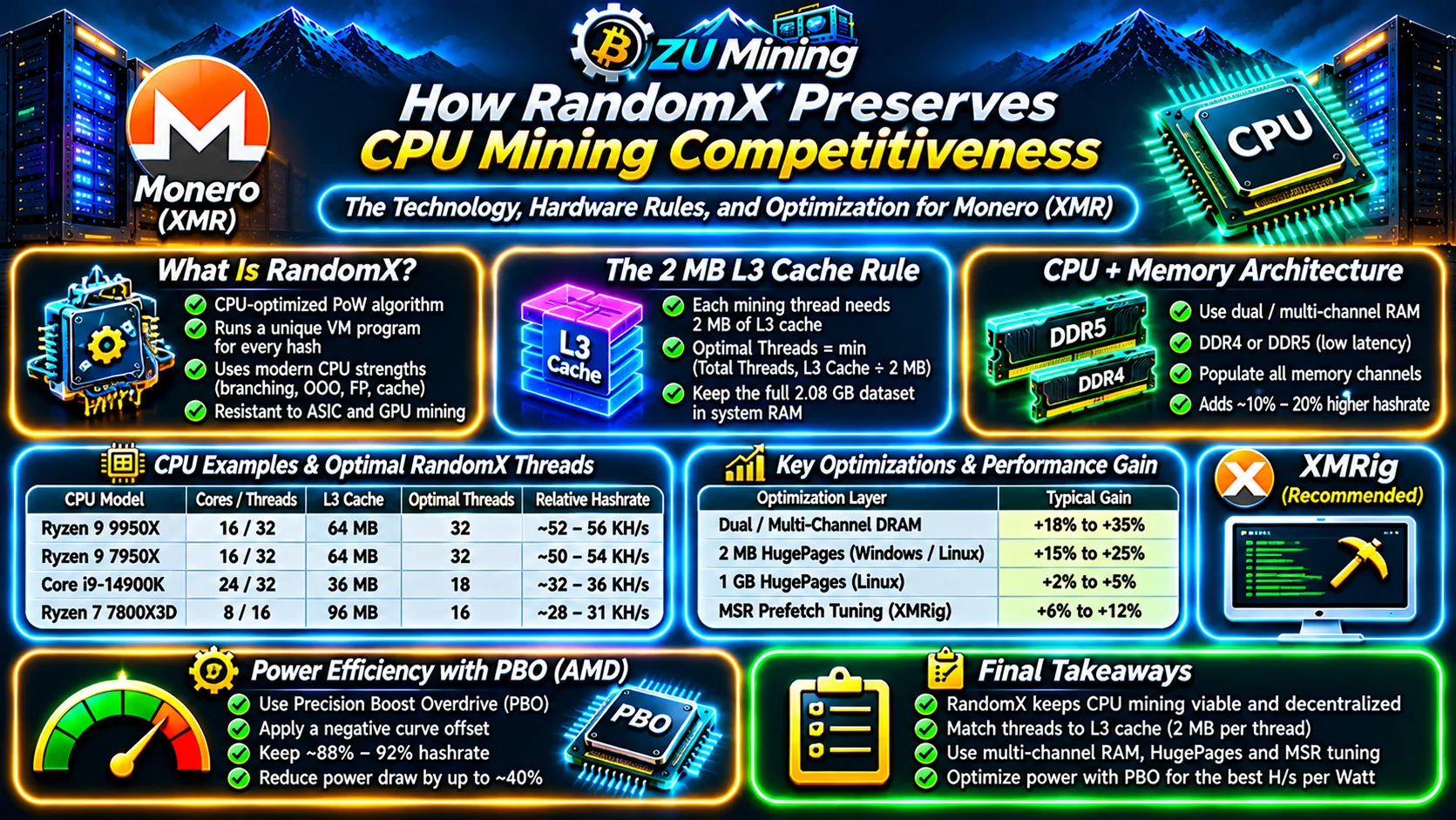
Monero (XMR) RandomX CPU Mining Guide: L3 Cache, DDR4/DDR5 Channels & HugePages
Learn why Monero RandomX CPU mining depends on 2 MB of L3 cache per thread, multi-channel system memory, OS HugePages, and XMRig MSR optimizations.
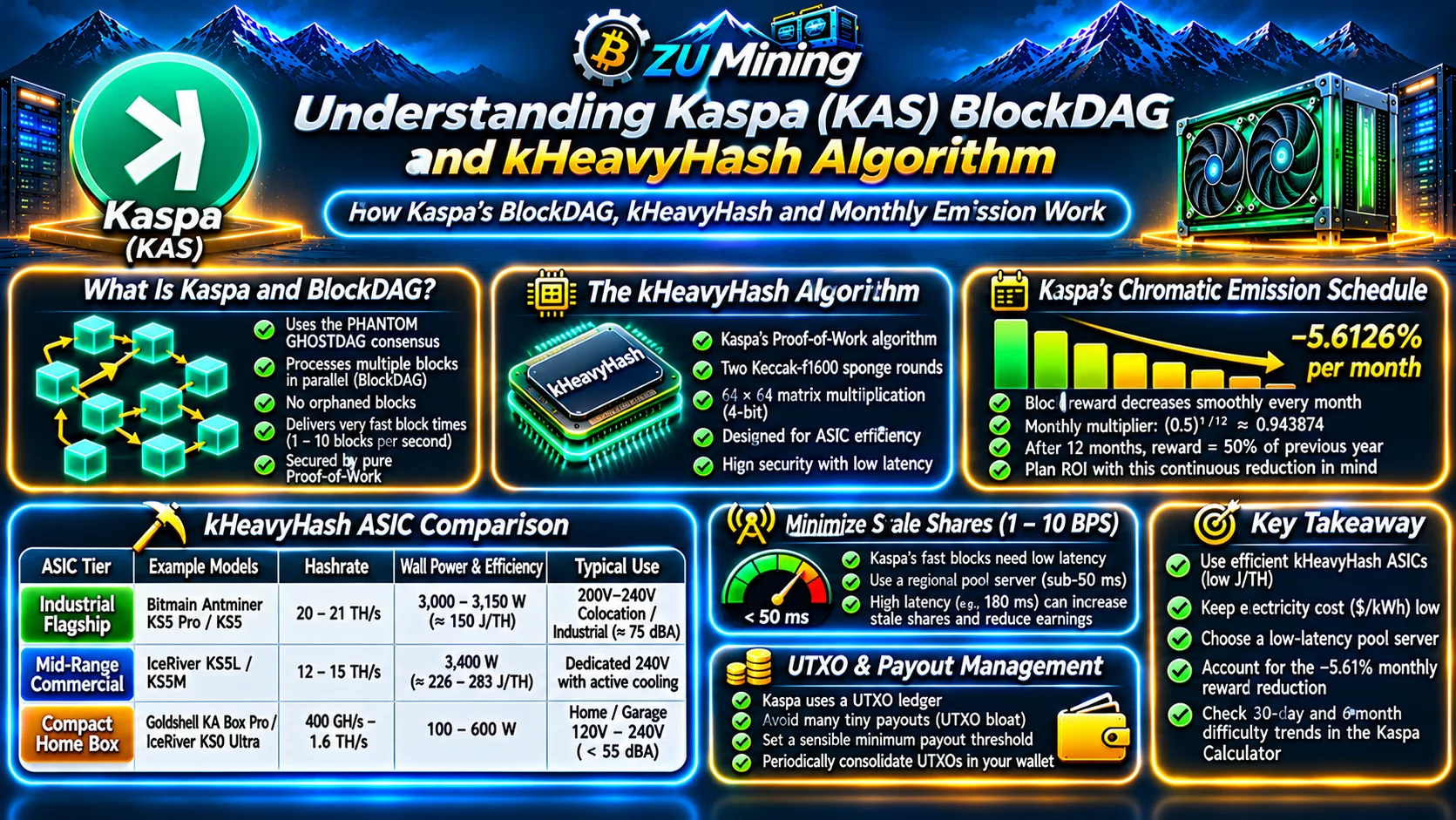
Kaspa (KAS) kHeavyHash Mining Guide: BlockDAG Emission Schedule & ASIC Efficiency
Understand Kaspa (KAS) kHeavyHash Proof-of-Work architecture, high-throughput BlockDAG block intervals, monthly chromatic reward reductions, and ASIC efficiency.
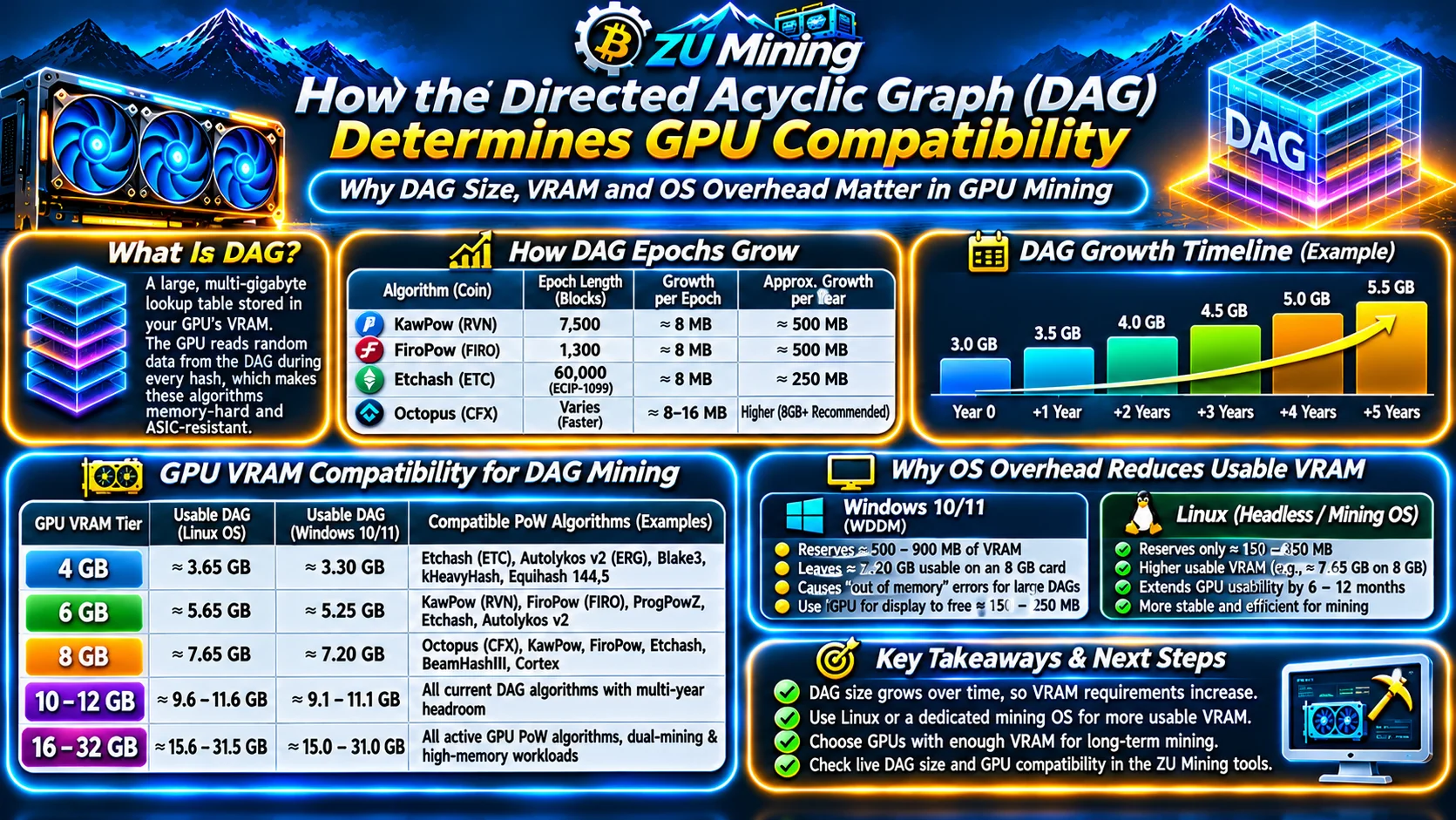
GPU VRAM & DAG Size Guide: Minimum Memory Requirements for Etchash, KawPow & Octopus
Understand how Directed Acyclic Graph (DAG) file growth impacts GPU VRAM requirements across Etchash, KawPow, FiroPow, and Octopus algorithms.
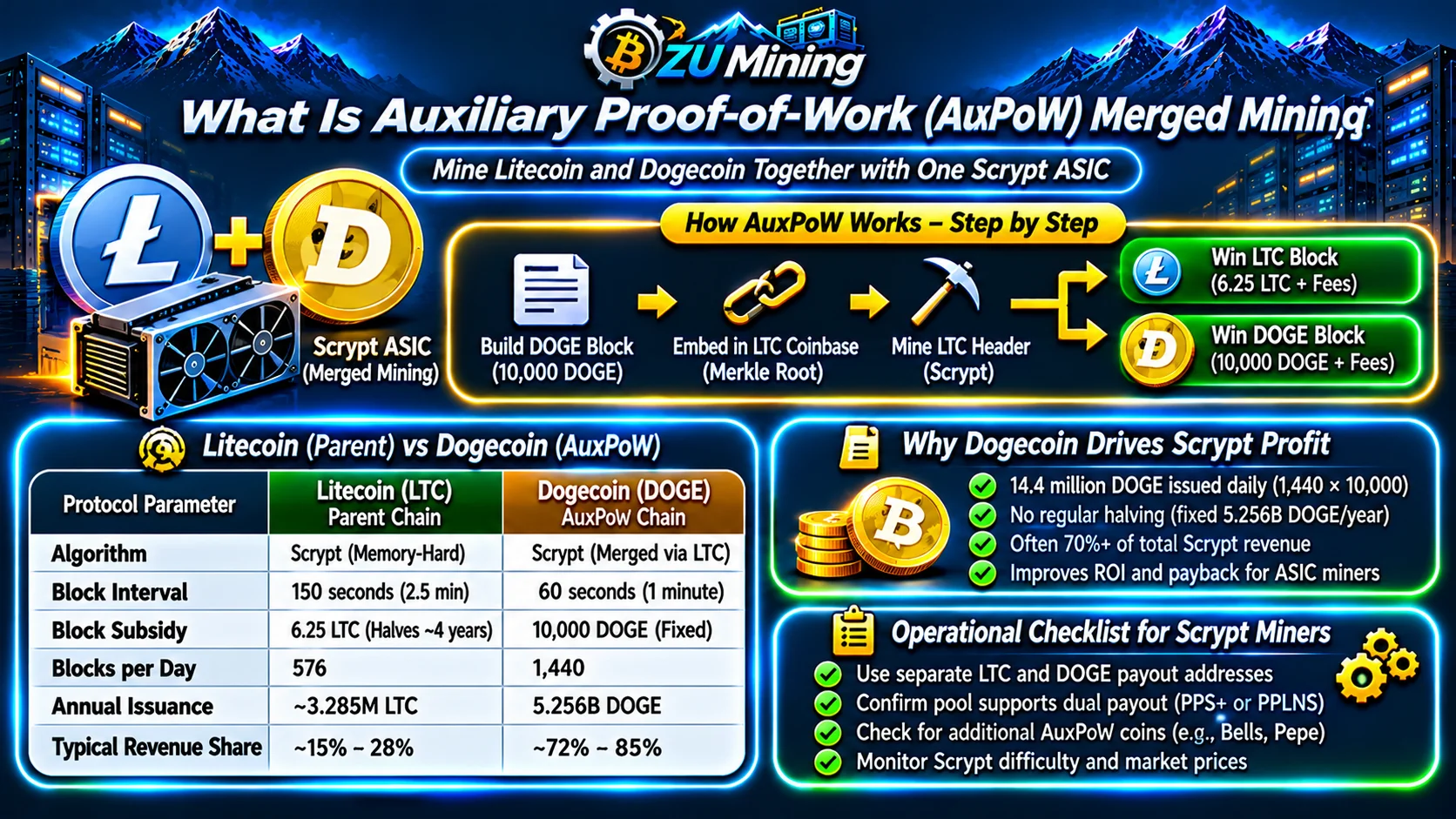
Scrypt Merged Mining Guide: How AuxPoW Mines Litecoin (LTC) & Dogecoin (DOGE) Simultaneously
Explore how Auxiliary Proof-of-Work (AuxPoW) enables Scrypt ASIC hardware to earn both Litecoin (LTC) and Dogecoin (DOGE) rewards simultaneously without increasing power draw.
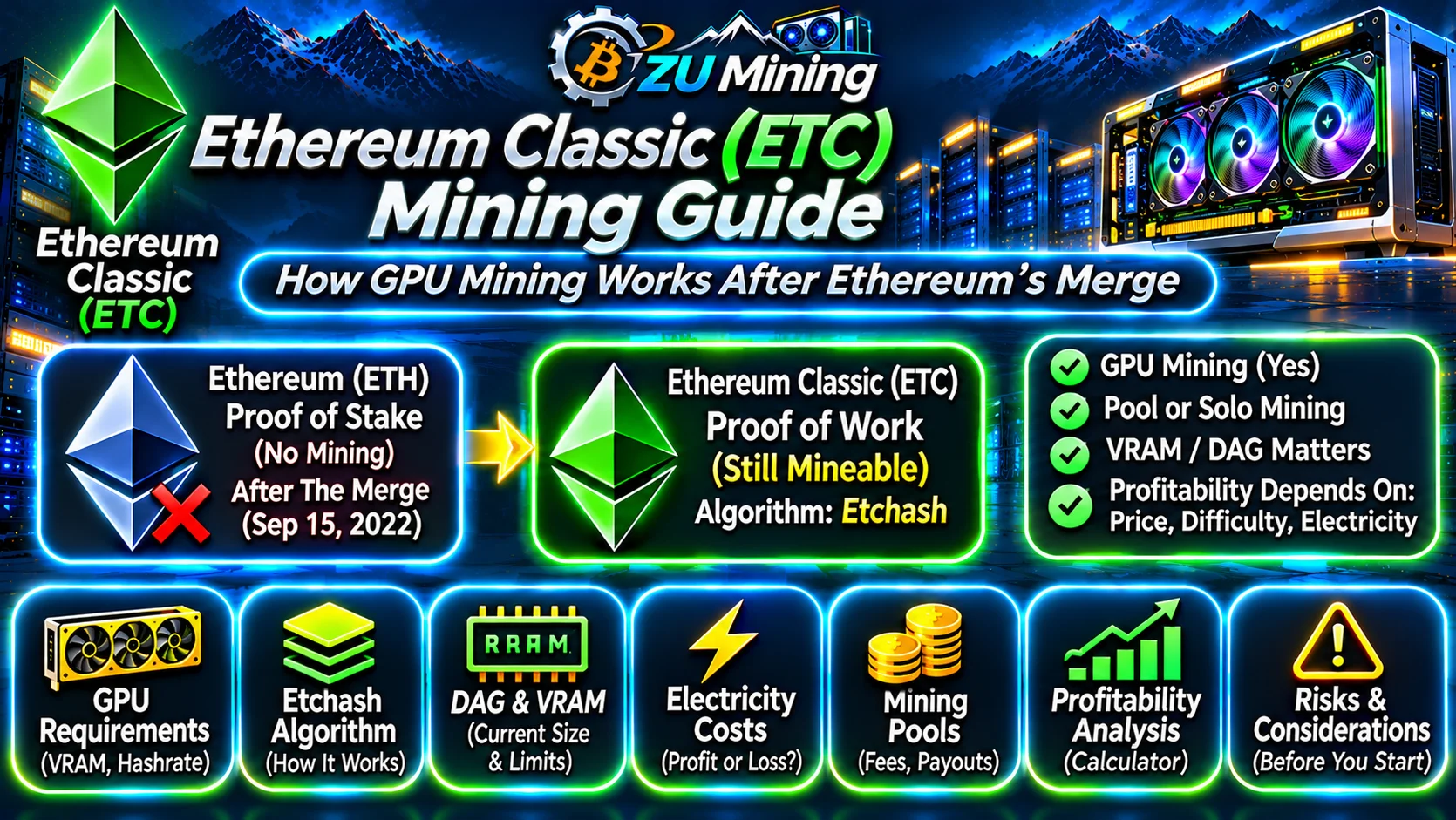
Ethereum Classic (ETC) Mining Guide: How GPU Mining Works After Ethereum’s Merge
Learn how Ethereum Classic mining works after Ethereum ended Proof-of-Work mining. Explore ETC’s Etchash algorithm, GPU requirements, VRAM, hashrate, electricity costs, mining pools, profitability factors, and the risks miners should understand before starting.
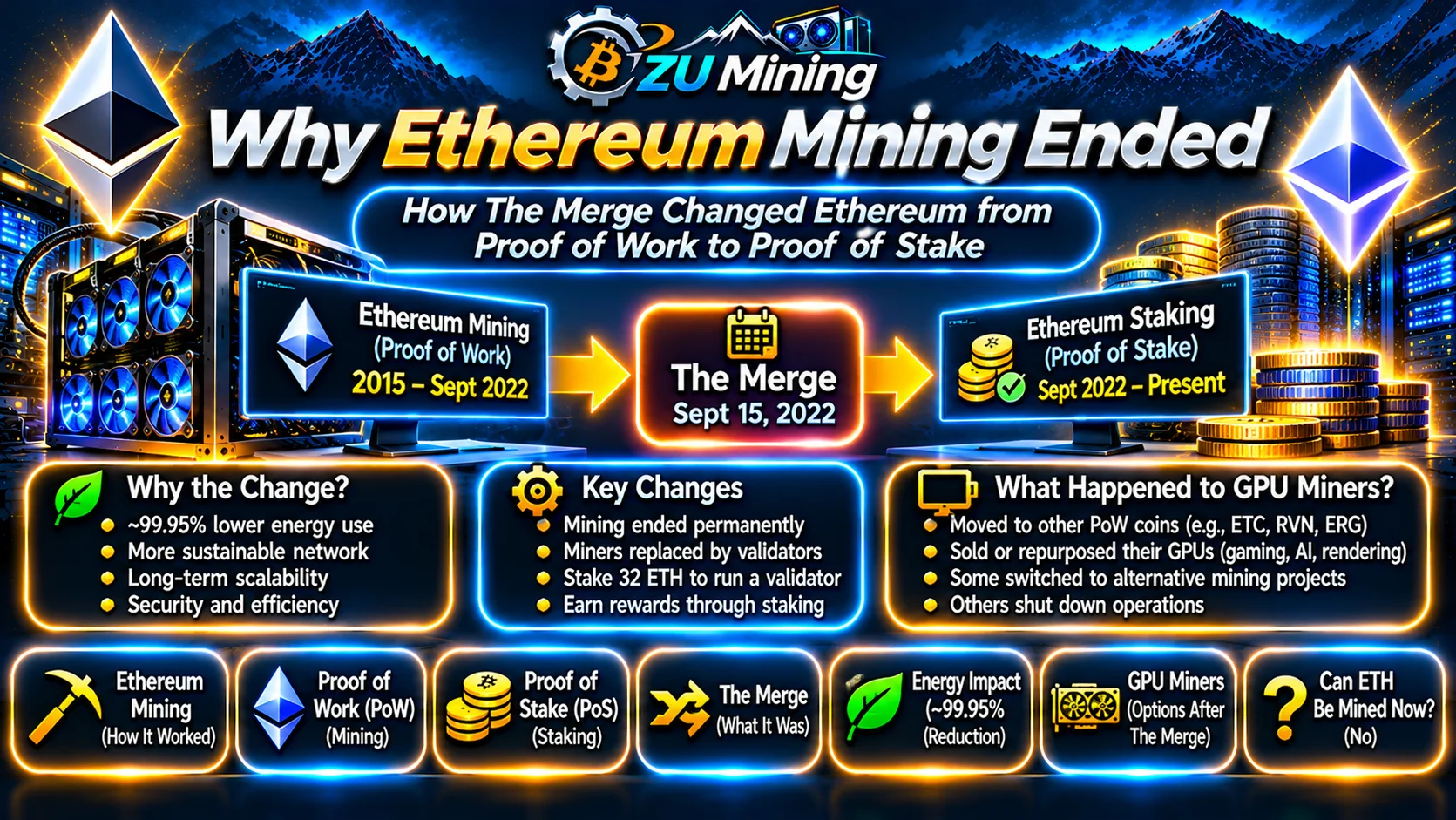
Why Ethereum Mining Ended: How The Merge Changed Ethereum from Proof of Work to Proof of Stake
Ethereum was once one of the world's most important GPU-mined cryptocurrencies, but mining ended permanently with The Merge in September 2022. Learn why Ethereum abandoned Proof of Work, how Proof of Stake replaced miners with validators, what happened to GPU miners, and whether ETH mining can ever return.
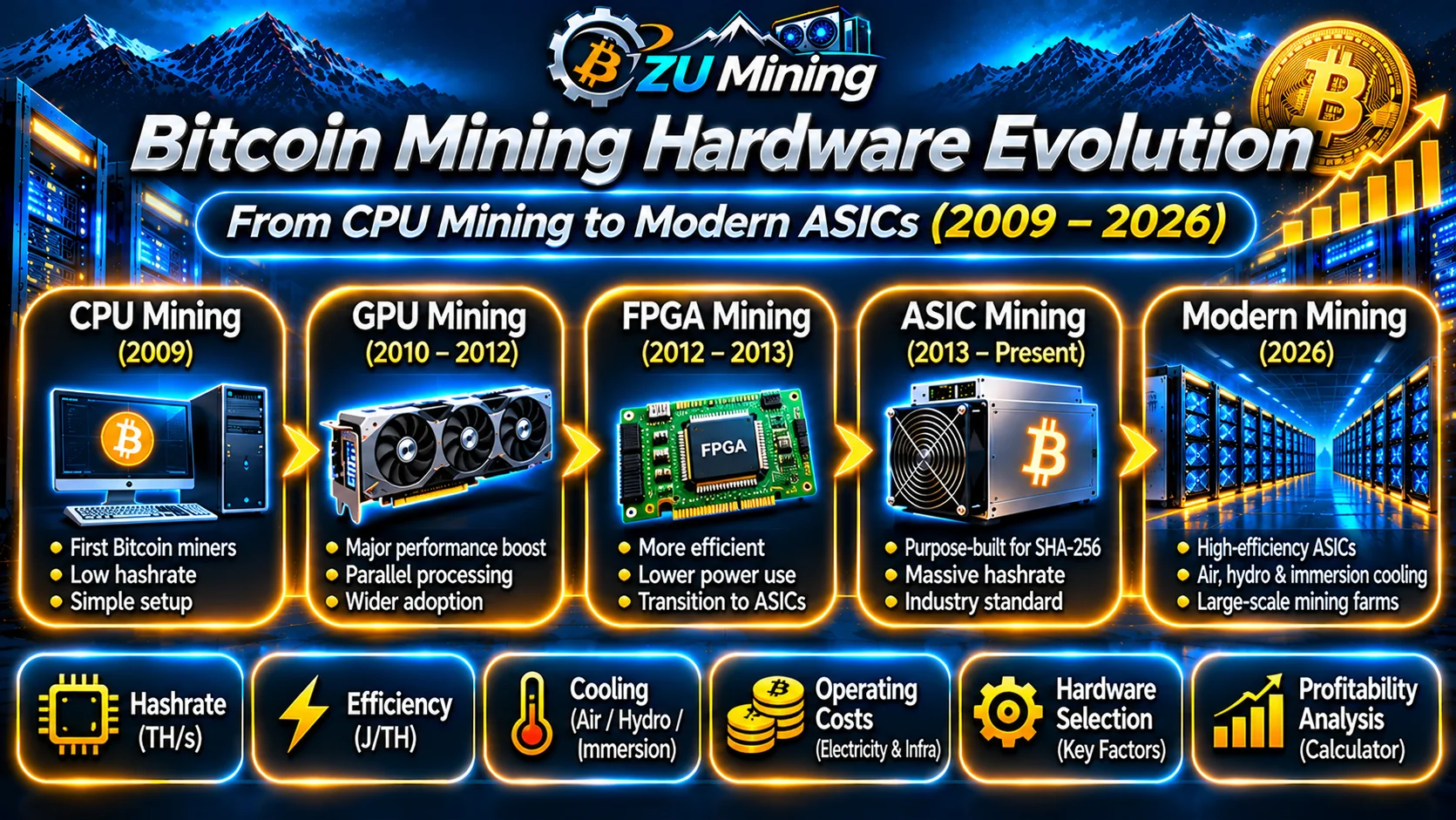
Bitcoin Mining Hardware Benchmark & Efficiency Evolution (2009–2026)
Explore how Bitcoin mining evolved from ordinary CPUs to GPUs, FPGAs and purpose-built ASIC miners. Learn why each hardware generation replaced the last, how efficiency became the key mining metric, and what modern Bitcoin mining looks like in 2026.
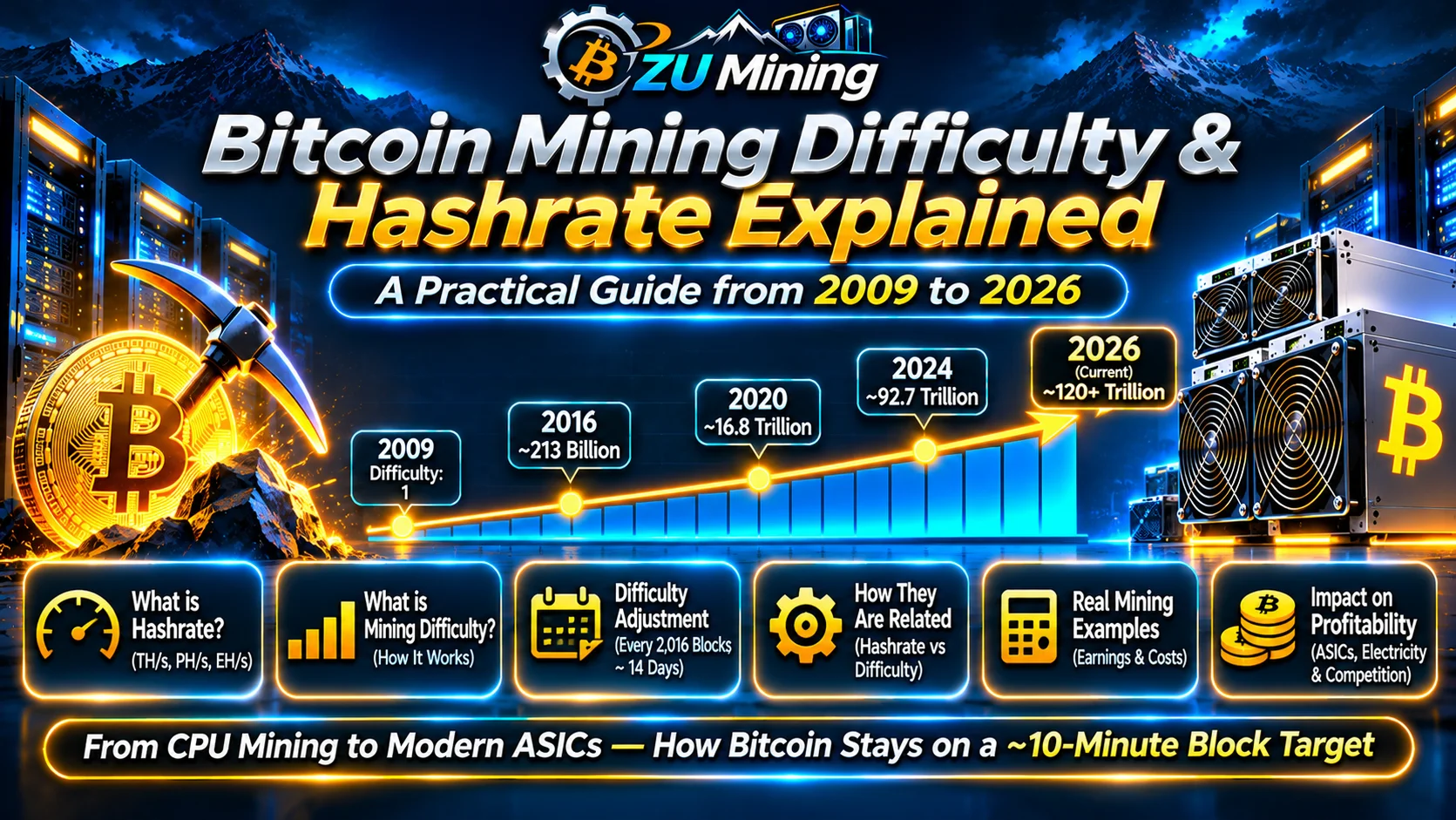
Bitcoin Mining Difficulty and Hashrate Explained: A Practical Guide
Learn how Bitcoin mining difficulty and network hashrate work, why difficulty adjusts every 2,016 blocks, and how these changes affect ASIC miners, block discovery, electricity costs, and profitability.