Understanding Kaspa's BlockDAG and kHeavyHash Algorithm
Traditional linear Proof-of-Work blockchains (such as Bitcoin or Litecoin) enforce a single chain rule: if two miners discover a valid block at the same second, one block is orphaned and its computational work is discarded. To prevent high orphan rates, linear chains must keep block times relatively slow (2.5 to 10 minutes).
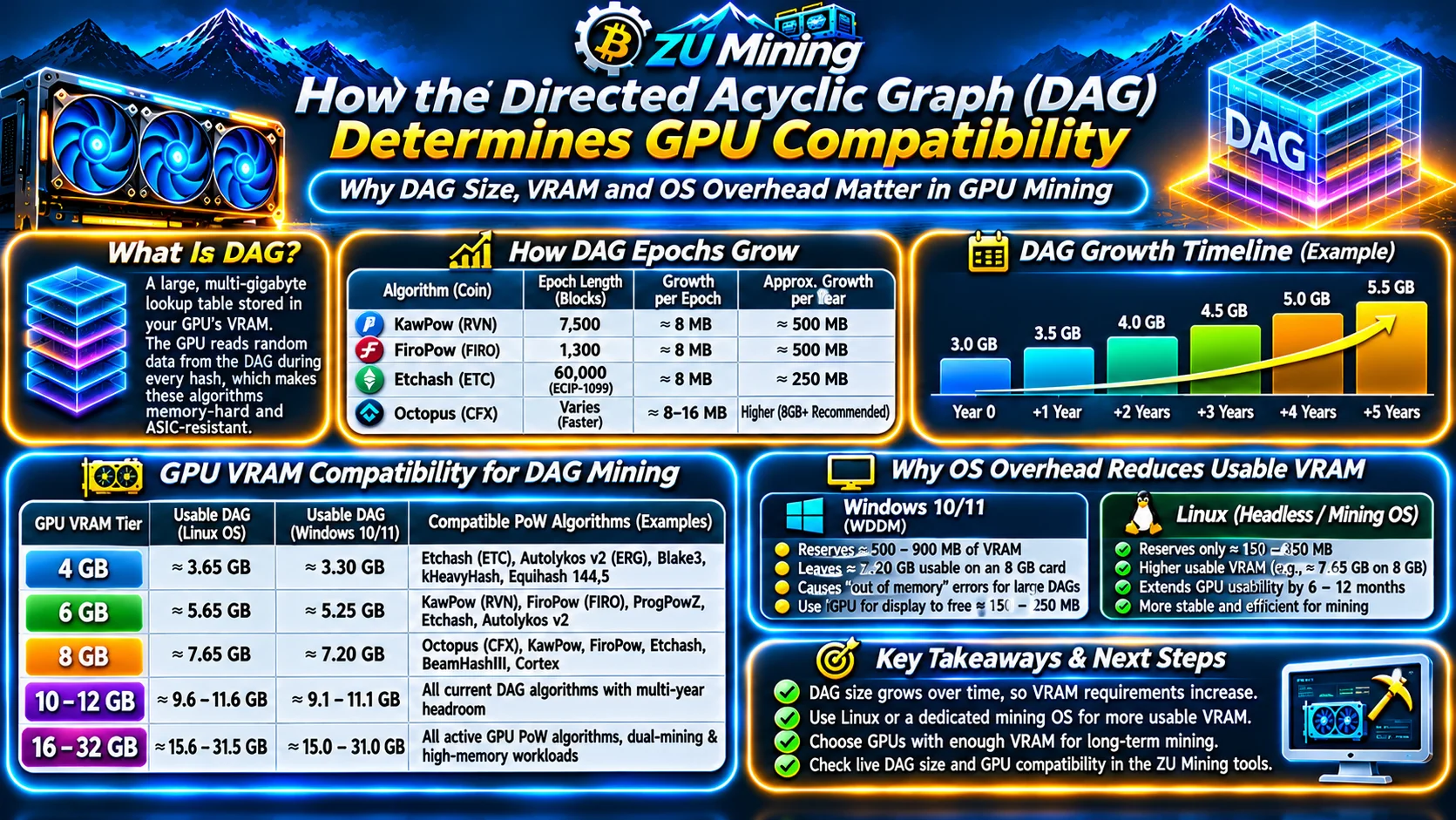
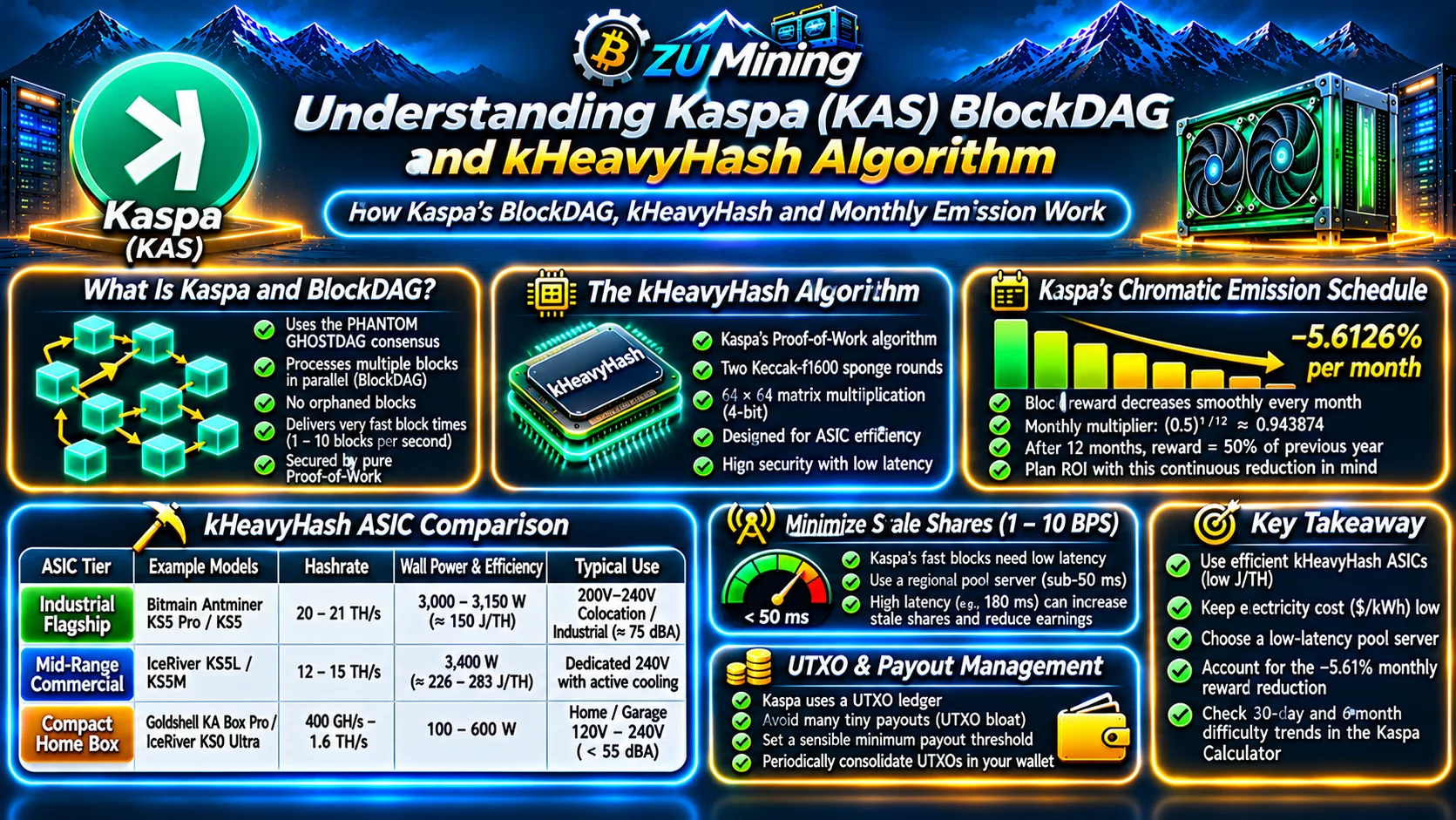
Kaspa (KAS) solves this bottleneck using the PHANTOM GHOSTDAG consensus protocol, which organizes parallel blocks into a Directed Acyclic Graph (BlockDAG) and orders them deterministically without orphaning valid concurrent blocks. This allows Kaspa to operate at sub-second block intervals (`1 to 10 blocks per second`) while relying on pure Nakamoto Proof-of-Work via the kHeavyHash algorithm (two Keccak-f1600 sponge rounds surrounding a 64×64 4-bit matrix multiplication).
1. The Chromatic Emission Schedule: Why KAS Rewards Step Down Monthly
Unlike Bitcoin—which cuts its block subsidy by 50% abruptly once every four years—Kaspa implements a smooth geometric ("chromatic") emission schedule. After its initial pre-deflationary phase, the Kaspa block subsidy decreases every single month by a factor of (1/2)1/12 (corresponding to each semitone of a 12-note musical octave):
Monthly Reward Multiplier = (0.5)1/12 ≈ 0.943874 (−5.6126% per month)
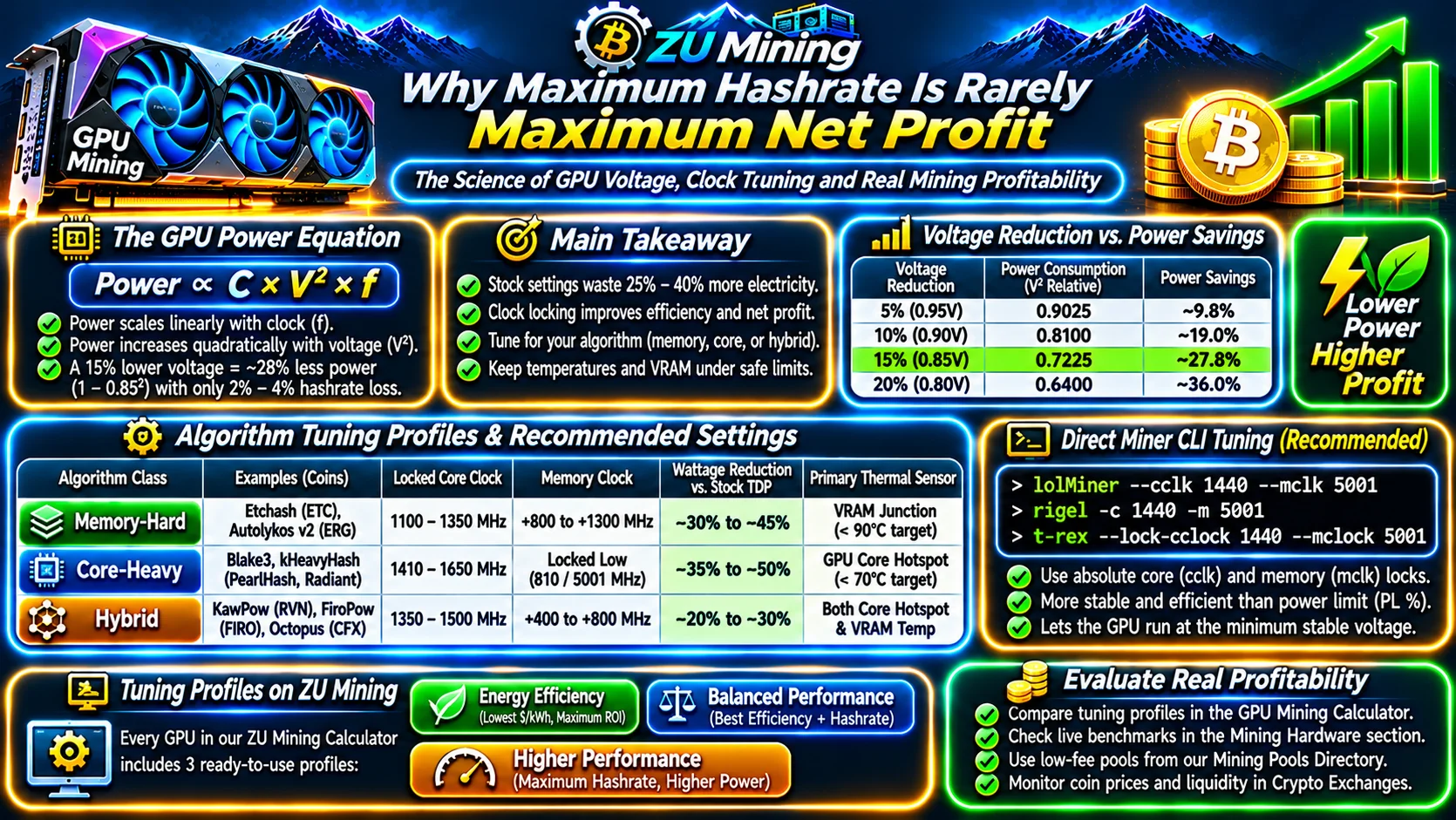
After 12 consecutive monthly step-downs, the block reward is exactly half of what it was one year prior (`0.943874^12 = 0.50`). Because coin issuance tightens every 30 days, miners modeling payback periods in the Kaspa (KAS) Mining Calculator must prioritize energy efficiency (`J/TH`) and low electricity tariffs.
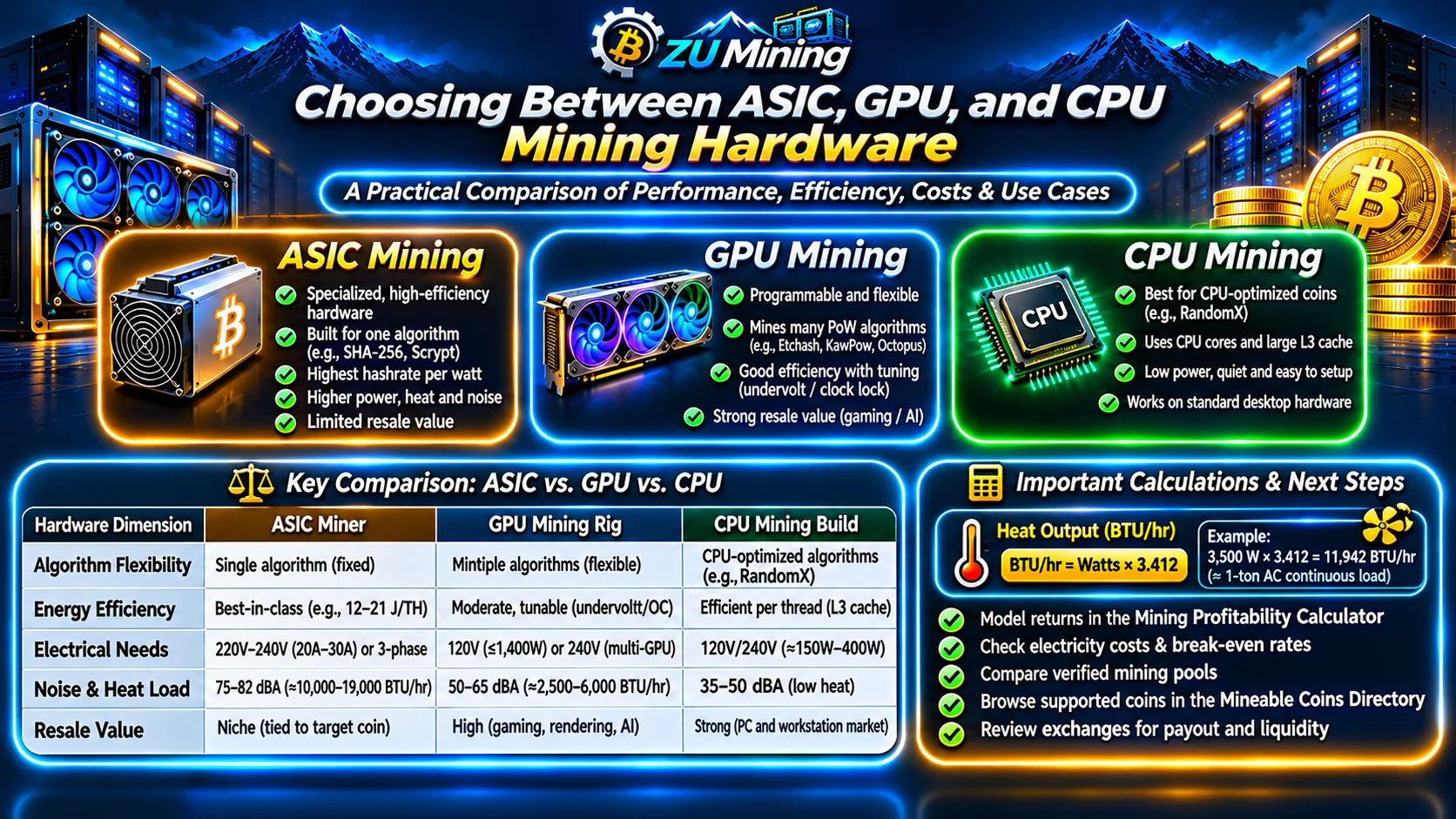
| kHeavyHash ASIC Tier | Representative Hardware Models | Hashrate Range | Wall Power & Efficiency | Deployment Environment |
|---|---|---|---|---|
| Industrial Flagship ASIC | Bitmain Antminer KS5 Pro / KS5 | 20 TH/s – 21 TH/s | 3,000W – 3,150W (~150 J/TH) | 200V–240V colocation / industrial PDU (75 dBA) |
| Mid-Range Commercial ASIC | IceRiver KS5L / KS5M | 12 TH/s – 15 TH/s | 3,400W (~226–283 J/TH) | Dedicated 240V circuit with active heat exhaust |
| Compact Home Box ASIC | Goldshell KA Box Pro / IceRiver KS0 Ultra | 400 GH/s – 1.6 TH/s | 100W – 600W | Residential 120V/240V desk or garage (< 55 dBA) |
Stratum Latency Optimization & UTXO Payout Management
2. Minimizing Stale Shares on 1–10 BPS BlockDAG Networks
Because Kaspa generates blocks every fraction of a second, the stratum job template updates continuously. If your ASIC miner is connected to an overseas pool server with 180 ms of network latency, a meaningful percentage of submitted shares may reference outdated parent block tips. Always select a regional server in our Verified Mining Pools Directory with sub-50ms ping, and review How to Choose a Crypto Mining Pool for PPLNS vs. PPS+ differences.
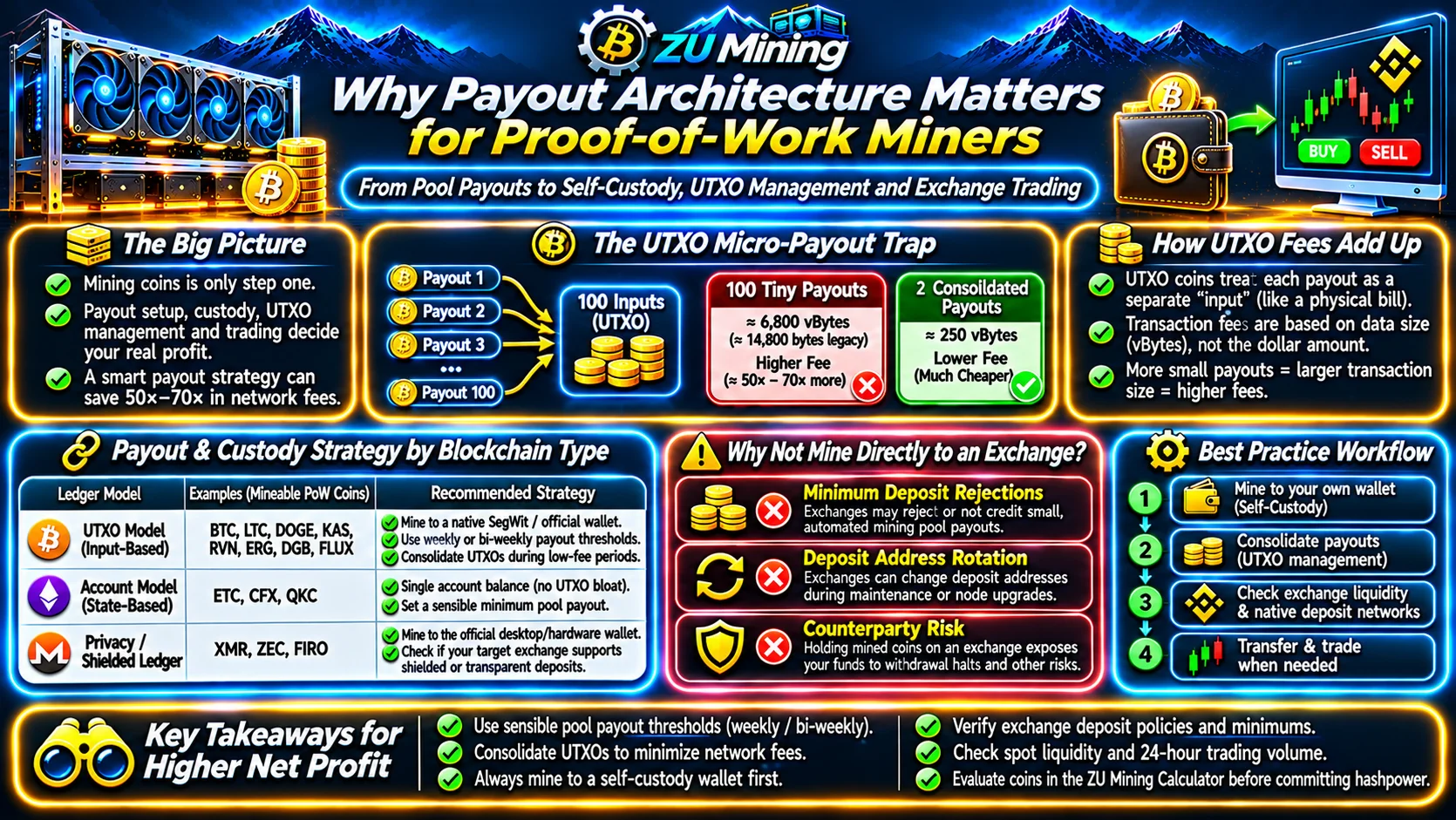
3. Compounding UTXOs and Native Layer-1 Exchange Deposits
Kaspa uses a UTXO ledger model with strict transaction mass limits. Receiving dozens of tiny automated pool payouts can fragment your wallet into hundreds of small UTXO inputs. Configure a sensible minimum payout threshold on your pool dashboard, periodically compound UTXOs in your self-custody wallet (see Managing Mining Payouts & UTXO Consolidation), and verify native Layer-1 KAS deposit networks across our Crypto Exchanges Directory, Mineable Coins Directory, and Mining Hardware Directory.
Never project 12-month Kaspa ASIC returns by multiplying today's daily KAS output by 365. Factor in the deterministic −5.61% monthly chromatic emission reduction and inspect 30-day and 6-month network difficulty charts inside the ZU Mining Kaspa Calculator.